
Can You Go Vegan in Hyderabad? Here’s Where the City Stands Today
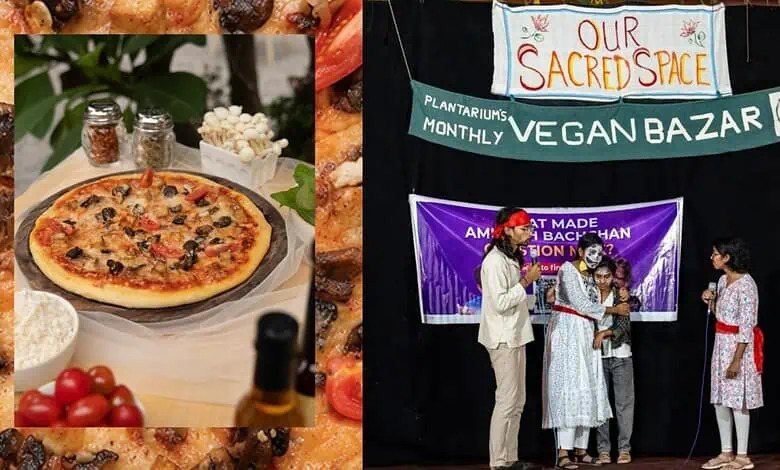
From vegan cafés and jackfruit biryani to mainstream restaurants adding plant-based dishes, Hyderabad’s vegan scene is evolving—but not without challenges.
HYDERABAD: Try going vegan in Hyderabad for a day, and the city might initially make you question your decision.
In a place celebrated worldwide for meat-heavy biryanis, slow-cooked haleem and spicy kebabs, eating entirely plant-based can seem like a difficult experiment. At the very least, you might expect to survive on a salad or a glass of juice.
But Hyderabad’s vegan landscape has changed significantly in recent years.
When PETA named Hyderabad India’s “Most Vegan-Friendly City” in 2019, many locals were sceptical. Seven years later, the reality is more complicated. Several dedicated vegan cafés have shut down, but plant-based choices are increasingly appearing on mainstream menus, while local entrepreneurs and activists continue to push the movement forward.
A vegan market in transition
Food blogger Sharmistha recalls that Hyderabad had around five or six fully vegan cafés operating around 2019. Many struggled to survive in the years that followed.
“Honestly, it’s a mix of feelings,” she says. According to her, the relatively small number of strict vegans and limited public awareness made it difficult for dedicated vegan businesses to remain financially viable.
The challenge is particularly pronounced in Hyderabad, where meat remains deeply connected to the city’s culinary identity.
Yet the decline of some vegan-only establishments does not necessarily mean the movement itself has stalled.
Suraj Seetharama, founder of Vegans of Telangana, says the growth of vegan food is increasingly happening within mainstream restaurants.
“While 100% vegan cafes face tough business realities across the country, plant-based options in mainstream restaurants have grown dramatically,” he says.
Volunteers from the organisation have approached local cafés and restaurants, encouraging them to add clearly labelled vegan dishes. According to Suraj, dozens of establishments now display vegan symbols on their menus.
The reality behind running a vegan café
For businesses that continue to operate as fully vegan establishments, survival has required more than passion.
Mohan Chowdhary, owner of E’woke in Sainikpuri, says running a vegan restaurant has involved significant financial and personal sacrifices.
“We lost a lot of money, spent our savings, and sacrificed immense time along the way,” Mohan says. “It took sheer grit, perseverance, and business acumen.”
One of the biggest lessons, he says, was that vegan businesses cannot depend exclusively on committed vegans.
“In our early days, we thought people would come simply because we were vegan,” he recalls. “Reality hit fast.”
The strategy changed: make food that appeals to everyone.
E’woke now serves familiar comfort foods, including plant-based meatballs, pizzas and seasonal vegan haleem. The approach is simple—give diners food they already enjoy, without making veganism the barrier to trying it.
Jackfruit biryani and the reinvention of familiar food
That same philosophy has found its way into homegrown food businesses.
Food blogger Sharmistha launched the cloud kitchen The Flavour Therapy with her mother, focusing on familiar dishes recreated with plant-based ingredients.
Instead of offering only salads or stereotypical “health food”, the kitchen uses ingredients such as peanut curd and jackfruit to recreate nostalgic favourites.
The menu includes jackfruit biryani, jackfruit 65 and meaty jackfruit pickles, demonstrating how traditional food memories can be adapted without relying on animal products.
For many diners, this approach may be an easier introduction to vegan food than an entirely unfamiliar menu.
Is Gen Z changing Hyderabad’s vegan movement?
While restaurants are adapting to demand, vegan activists are attempting to create that demand in the first place.
Vegans of Telangana conducts park outreach programmes, street awareness campaigns and monthly Vegan Bazaars. Some campaigns focus on explaining the practices of the dairy industry and the connections between food choices, animal welfare and climate concerns.
Suraj says young people, particularly Gen Z, have played an important role in the organisation’s recent outreach.
“The response over the last three years has been driven largely by young people and Gen Z,” he says.
For activists, the objective goes beyond encouraging people to change their diets for a day. It is about making people question where their food comes from and whether alternatives can become part of everyday eating.
So, can you actually eat vegan in Hyderabad?
Yes—but knowing how to order makes a difference.
Sharmistha points out that several popular South Indian foods are naturally plant-based, provided ingredients such as ghee and butter are left out.
That makes dishes such as many varieties of dosa, idli and other traditional staples relatively easy to adapt.
Pan-Asian restaurants can also offer more extensive choices. Sharmistha highlights Burma Burma for its clearly marked vegan options, including plant-based versions of dishes such as sushi and dim sums.
Her personal recommendations include:
- E’woke: Vegan Meatball Curry, Butter Chicken, Mock Meat Pizza and Haleem
- Burma Burma: Mock Meat Skewers
- Gabru Di Chaap: Vegan Karari Chaap
The growing availability of such dishes suggests that eating vegan in Hyderabad no longer necessarily means settling for a plate of lettuce.
From survival to reinvention
Hyderabad’s vegan story is neither a straightforward success nor a failure.
The closure of several vegan-only cafés shows the commercial difficulties involved in building a specialised customer base. At the same time, the expansion of vegan choices within conventional restaurants indicates that plant-based eating is finding a different route into the city’s food culture.
For businesses like E’woke and The Flavour Therapy, the answer has been to focus on flavour and familiarity rather than relying solely on the vegan label.
For activists, the focus remains awareness, particularly among younger audiences.
As Mohan puts it, the future of veganism depends on both businesses and consumers making conscious choices.
For a city known for its meat-heavy culinary traditions, perhaps the more interesting question is no longer whether Hyderabad can go vegan.
It is whether plant-based food can become part of Hyderabad’s food culture without asking the city to give up the flavours it already loves.
0 Comments