Skip to content Skip to left sidebar Skip to right sidebar Skip to footer

Month: May 2026

Kids Summer Camp in Tarnaka Successfully Running – Continues Until May 25

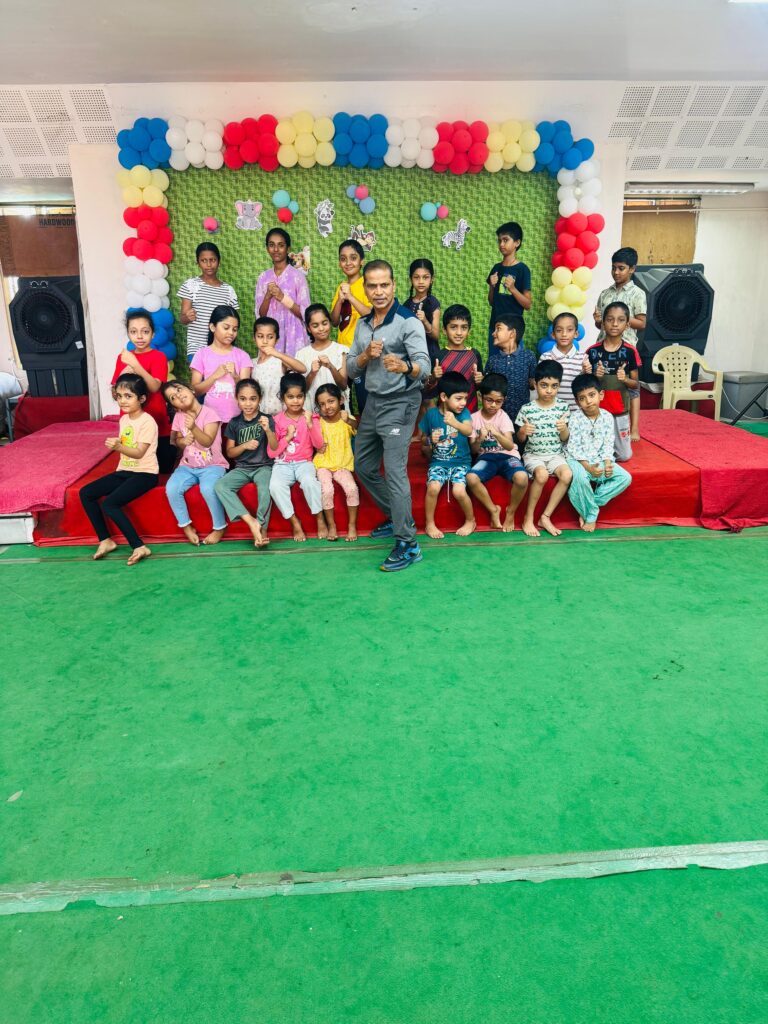
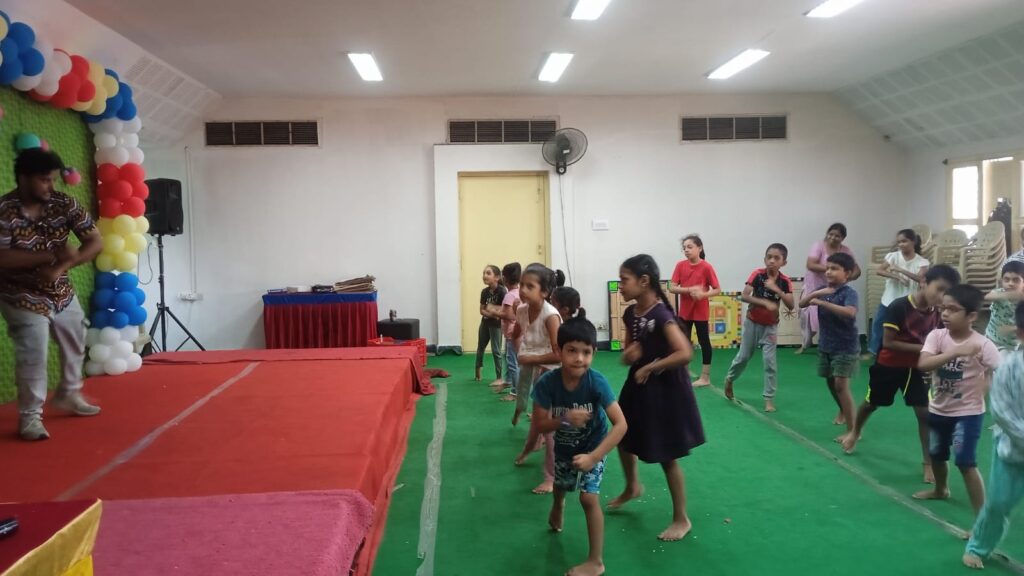
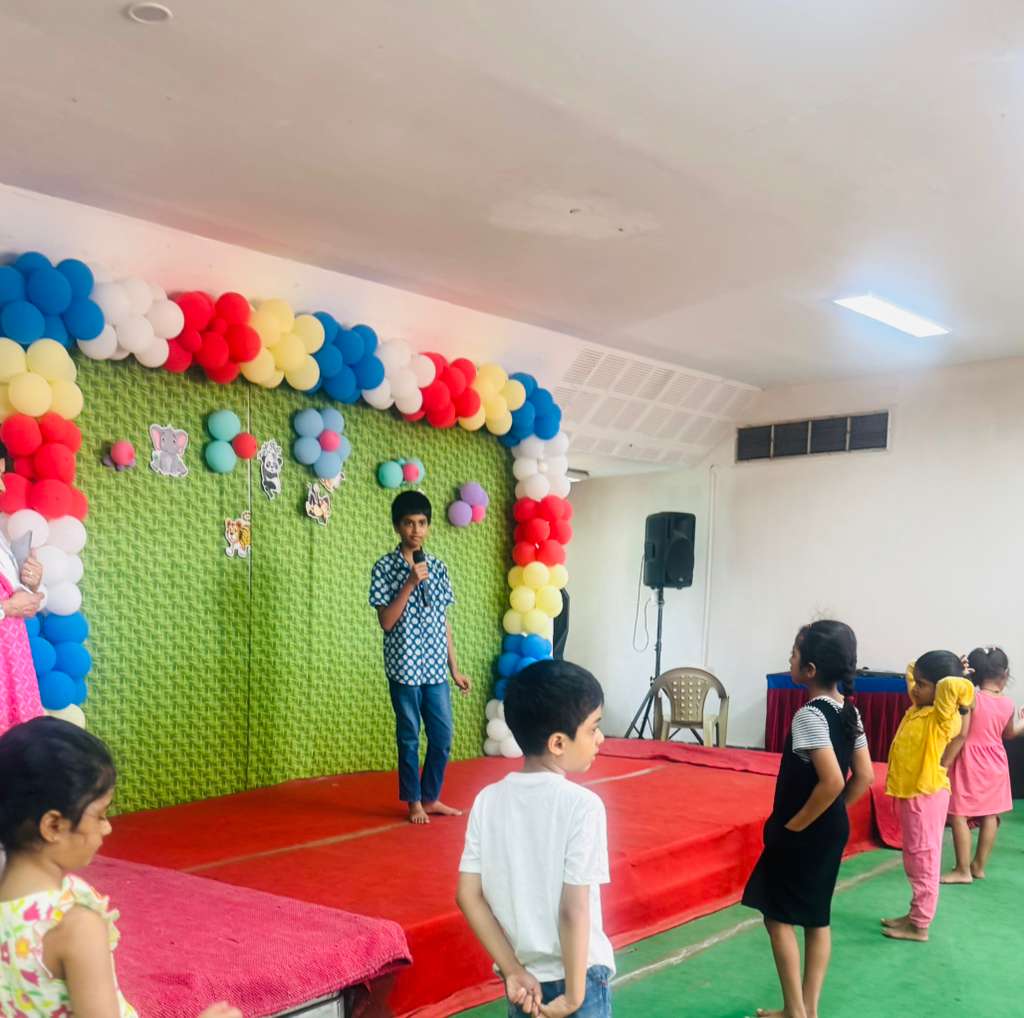
The “Kids Summer Camp – 2026”, being organized at Marri Krishna Hall (Mini Hall), Tarnaka, is receiving an overwhelming response from children and parents and is continuing successfully. The camp has been specially designed to help children make productive use of their summer holidays while enhancing their physical, mental, and creative development. As the camp has already completed 10 successful days, a large number of children are actively participating every day with great enthusiasm.

This summer camp offers children a perfect blend of fun and learning through a variety of engaging activities. Conducted daily from 9:15 AM to 12:30 PM, the camp includes programs such as Yoga & Mindfulness, Arts & Crafts, Storytelling Sessions, Dance, Karate, Traditional & Ethnic Games, Personality Development, Public Speaking Skills, Fun Skill Games, Cultural Awareness & Discussions, Good Values & Daily Habits, and Child Safety & Awareness.

The yoga sessions are helping children improve concentration and mental peace, while arts and crafts activities are encouraging creativity and imagination. Storytelling sessions are enhancing children’s listening skills and creative thinking. Activities like dance and karate are promoting physical fitness, discipline, and confidence among participants. Traditional games are also introducing children to cultural values and heritage.

In addition, personality development and public speaking sessions are helping children build confidence and improve communication skills. Through Good Values & Daily Habits sessions, children are learning discipline, respect for elders, and positive daily routines. Child Safety & Awareness sessions are also educating children about important safety practices.

Parents have expressed happiness over the positive changes they are seeing in their children since joining the camp. Many have appreciated the organizers for creating a meaningful platform where children can learn valuable life skills while enjoying their summer vacation. The children are also excited to attend the camp every day and explore new activities.

According to the organizers, the summer camp will continue until May 25, and parents who are still interested in enrolling their children are encouraged to register as soon as possible.

Venue: Marri Krishna Hall (Mini Hall), Tarnaka
Time: 9:15 AM – 12:30 PM
Contact: 91829 84550

This summer camp has become a special attraction in the Tarnaka area by providing children with an enriching and enjoyable learning experience during their holidays.

PM Modi Launches Major Development Projects in Hyderabad, Calls Cyberabad India’s Growth Engine

Hyderabad: Prime Minister Narendra Modi on Sunday inaugurated and laid the foundation stone for several major development projects in Hyderabad, highlighting Cyberabad’s growing role as a key driver of economic and technological growth in India.

The Prime Minister was joined by Telangana Governor Shiv Pratap Shukla and Chief Minister Revanth Reddy during the event.

Addressing the gathering, PM Modi said Cyberabad has emerged as a critical hub for Telangana’s progress and holds importance not only nationally but globally.

“The strength of Cyberabad is both national and global. It is a major centre for the rapid development of Telangana and the country. Therefore, today from Cyberabad, numerous major projects are being launched to make Telangana a major manufacturing powerhouse of the country,” he said.

He stated that the newly launched and proposed projects would create thousands of employment opportunities and significantly improve infrastructure connectivity in the state.

“The projects whose foundation stone was laid or inaugurated today will provide thousands of new jobs here. Telangana’s connectivity has also been strengthened. I congratulate the people of Telangana for these projects,” PM Modi added.

Highlighting the Centre’s investment in Telangana’s railway sector, the Prime Minister compared current allocations with the pre-2014 period.

“For an undivided Andhra Pradesh before 2014, the railway budget was even less than ₹1,000 crore. Today, the railway budget for Telangana alone is approximately ₹5,500 crore. Currently, work is underway on railway projects worth about ₹50,000 crore,” he said.

PM Modi also reaffirmed the Central government’s commitment to Telangana’s development and welfare.

He said the youth, farmers, industries, MSMEs, and startups in Telangana are playing a crucial role in shaping the state’s future.

“Today, the youth of Telangana are dreaming new dreams. Farmers want to move forward with new hopes. Industries, MSMEs, and startups here all want to contribute to building a developed Telangana because if Telangana develops, India will develop,” he said.

Assuring continued support from the Centre, PM Modi said the government would work at an even faster pace to help fulfil the aspirations of people across Telangana.

The event marked another major push toward infrastructure expansion, industrial growth, and connectivity development in Telangana, reinforcing Hyderabad’s position as a leading economic hub in India.

PM Modi Inaugurates Sindhu Hospital in Hyderabad, Praises Technology-Driven Healthcare

Hyderabad: Prime Minister Narendra Modi on Sunday inaugurated Sindhu Hospital in Hyderabad, calling it a significant step toward strengthening healthcare infrastructure in the city and nearby regions.

Sharing the update on social media platform X, the Prime Minister praised the hospital’s efforts to improve access to quality healthcare services while highlighting its focus on innovation and advanced medical technology.

“Inaugurated the Sindhu Hospital in Hyderabad. It’s a laudable effort to improve healthcare infrastructure in the city and surrounding areas. The emphasis on integrating latest technology and innovation by the hospital team is appreciable,” PM Modi posted on X.

The newly inaugurated hospital is expected to enhance healthcare accessibility for residents in Hyderabad and surrounding districts by offering modern medical services supported by advanced technological systems.

The inauguration took place as part of Prime Minister Modi’s visit to Telangana on Sunday, during which he participated in several official engagements in Hyderabad.

The Prime Minister’s visit has drawn significant political and public attention, with healthcare development emerging as one of the key highlights of his schedule.

The launch of Sindhu Hospital reflects the growing emphasis on strengthening medical infrastructure in Telangana as demand for quality healthcare continues to rise alongside rapid urban development.

With increasing focus on digital health solutions, advanced diagnostics, and patient-centric care, the hospital is expected to contribute significantly to Hyderabad’s expanding healthcare ecosystem.

Police Verification for Domestic Workers and Tenants: A Civic Duty in Changing Times

Hyderabad: Amid growing concerns over crimes involving domestic workers and tenants, Telangana Director General of Police CV Anand, IPS, has urged citizens to make greater use of police verification services to ensure safer homes and neighborhoods.

His appeal goes beyond administrative advice—it reflects the urgent need for citizens to adapt to changing urban realities and take proactive steps toward community safety.

Changing Urban Dynamics

Over the past two decades, cities like Hyderabad have witnessed rapid urban growth. Rising migration, nuclear families, and dual-income households have significantly increased dependence on domestic workers such as maids, cooks, drivers, caretakers, and security staff.

At the same time, the rental housing market has expanded rapidly, with many landlords renting properties without conducting proper background checks.

While these systems support urban lifestyles and economic activity, they also create vulnerabilities.

Several recent incidents in Telangana and across India have highlighted crimes such as theft, assault, and even murder allegedly involving individuals who had insider access to homes. These cases expose serious gaps in verification and public awareness.

Trust-Based Relationships Under Pressure

Indian households have traditionally functioned on trust.

Domestic workers are often treated like extended family members, while tenants are frequently accepted based on personal references or urgency rather than proper documentation.

Although this trust-based approach has worked for generations, modern urban environments—with higher mobility and greater anonymity—have made such informal systems increasingly risky.

It is important to note that the vast majority of domestic workers and tenants are law-abiding individuals. However, in rare cases where trust is misused, the consequences can be severe.

In many such cases, accused individuals allegedly gain familiarity with household routines, identify valuables, and sometimes work with outside accomplices.

What is Police Verification?

Police verification is a formal process in which local law enforcement verifies an individual’s identity, address, and criminal history, if any.

For domestic workers and tenants, this generally involves:

  • Submission of valid identity proof
  • Address verification
  • Photographs
  • References (in some cases)

These details are recorded and verified through police systems.

In Telangana, authorities have streamlined this process through local police stations. Despite this, public participation remains low due to lack of awareness and perceived inconvenience.

Why Verification Matters

1. Crime Prevention

When individuals know their details are officially recorded, it acts as a strong deterrent against criminal behavior.

2. Faster Investigations

In the event of a crime, verified records help police trace individuals quickly and coordinate investigations efficiently.

3. Documentation and Accountability

Verification creates a formal record between employers/landlords and workers/tenants, reducing ambiguity.

4. Protection for Workers and Tenants

Verification also protects genuine workers and tenants from false allegations by establishing their legitimacy.

5. Safer Communities

When more households adopt verification practices, neighborhoods become safer and less attractive to criminal elements.

Need for Greater Public Awareness

One of the biggest challenges is the gap between available services and public participation.

Police departments must strengthen awareness campaigns through:

  • Resident Welfare Associations (RWAs)
  • Community meetings
  • Social media campaigns
  • Housing society outreach programs

Citizens must understand that police verification is a basic safety measure—not an unnecessary burden.

Practical Steps for Citizens

Residents can improve safety by following simple steps:

  • Collect valid ID proofs such as Aadhaar or voter ID
  • Submit worker and tenant details to local police stations
  • Prefer hiring through registered agencies
  • Install CCTV cameras at entry and exit points
  • Inform neighbors or RWAs about new tenants or staff
  • Regularly update records when workers change or tenants vacate

Addressing Common Concerns

Some people avoid verification because they believe it is time-consuming or fear offending workers and tenants.

However, authorities have simplified the process significantly.

Presenting verification as a standard procedure for everyone helps avoid discomfort and ensures fairness.

In fact, many professional domestic workers now welcome verification as it boosts their credibility.

Shared Responsibility for Safer Cities

Public safety cannot be left entirely to law enforcement agencies.

Police can respond to crimes, but prevention often begins at home.

DGP CV Anand’s message highlights the need for a mindset shift—from informal trust to informed trust, and from reactive responses to preventive action.

Conclusion

As urban India continues to evolve, police verification for domestic workers and tenants is becoming a necessity rather than an option.

It is a simple yet effective tool to reduce risks, improve accountability, and strengthen community safety.

Trust remains important—but in today’s fast-changing urban environment, trust without verification can become a serious risk.

Safer cities will be built not only through policing, but through responsible citizens adopting practical safety measures that prevent crime before it happens.

Alignment Plans Released for Bullet Train Routes Connecting Bengaluru to Chennai and Hyderabad

Bengaluru: Three months after the Union Budget announced high-speed rail corridors linking Bengaluru with Chennai and Hyderabad, Indian Railways has now released the proposed alignments for both routes, offering a clearer picture of the ambitious bullet train projects.

The newly released plans also include an approximate alignment for the Bengaluru-Mysuru corridor, despite the route not being included in the Union Budget announcement.

Bengaluru-Chennai Corridor

The proposed Bengaluru-Chennai high-speed rail line will stretch approximately 306 kilometres. According to the alignment map, the route will begin at Baiyappanahalli in Bengaluru and pass through key locations including Whitefield, Kodihalli, and other surrounding regions before heading toward Chennai.

A major highlight of the project is a 15.94-kilometre tunnel section within Bengaluru city limits, designed to minimize disruption in densely populated urban areas. Outside the city, the corridor is expected to feature a combination of elevated and at-grade tracks.

The project aims to significantly reduce travel time between Bengaluru and Chennai while boosting economic connectivity between Karnataka and Tamil Nadu.

Bengaluru-Hyderabad Corridor

The proposed Bengaluru-Hyderabad bullet train corridor will cover around 607.03 kilometres.

The route is expected to include stations at key locations such as:

  • Kodihalli
  • Devanahalli (near Kempegowda International Airport)
  • Additional stops across Karnataka, Andhra Pradesh, and Telangana before reaching Hyderabad

This corridor is expected to improve intercity transportation and provide a faster alternative to road and air travel.

Bengaluru-Mysuru Route Also Proposed

Although the Bengaluru-Mysuru high-speed rail corridor was not part of the Union Budget announcement, railway authorities have reportedly shared an approximate alignment for the route.

This indicates that authorities may be considering future expansion of India’s high-speed rail network in southern states.

Boost to Southern Rail Connectivity

The announcement of these alignments marks a significant step toward expanding India’s bullet train infrastructure beyond western India, where the Mumbai-Ahmedabad high-speed rail project is currently under development.

If implemented successfully, the Bengaluru-Chennai and Bengaluru-Hyderabad bullet train corridors could transform travel across South India by reducing commute times, improving regional connectivity, and supporting economic growth.

5 Key Features of the Bengaluru-Hyderabad Bullet Train

India’s high-speed rail ambitions just moved from blueprint to ground truth.

Three months after the Union Budget announced transformative bullet train projects connecting Bengaluru to Chennai and Hyderabad, the Indian Railways and **National High Speed Rail Corporation Limited **(NHSRCL) have released detailed alignment plans—marking a critical milestone toward faster, cleaner, and more connected mobility across South India.

Announced on May 6, 2026, these alignments aren’t just lines on a map. They represent years of feasibility studies, stakeholder consultations, and engineering preparation—and they signal that India’s high-speed rail revolution is accelerating beyond the Mumbai-Ahmedabad corridor.

🗺️ Route Snapshots: Where the Trains Will Run

🚉 Bengaluru–Chennai Corridor (306 km)

SegmentKey Details
Start/EndBaiyappanahalli (Bengaluru) → Chennai Central
Karnataka Stretch100.7 km; passes through Whitefield, Kodihalli (Hoskote), Kolar
Andhra PradeshChittoor station
Tamil NaduParandur (near proposed second Chennai airport), Poonamalle
Land Required~1,359 hectares in Karnataka
Bengaluru Tunnel15.94 km underground section to minimize urban disruption
Projected Travel Time~1 hour 13 minutes (vs. ~4+ hours currently)

🚉 Bengaluru–Hyderabad Corridor (607 km)

SegmentKey Details
Start/EndBengaluru → Shamshabad (Hyderabad Airport)
Karnataka StationsKodihalli, Devanahalli (near Kempegowda International Airport), Alipur (Chikkaballapur)
Andhra/Telangana StationsHindupur, Anantapur, Gooty, Dhone, Kurnool, Mannanur, Bharat City (planned township), Hyderabad Airport
Land Required~237.5 hectares in Karnataka
Projected Travel Time~2 hours (vs. ~5–6 hours currently)

🚉 Bengaluru–Mysuru Corridor (~157 km) – Approximate Alignment

While not included in the Union Budget announcement, an indicative alignment has been shared: ✅ Stations at Mandya, Ramanagara, Kengeri, Electronics City (near Huskur)
✅ Connects to Chennai corridor at Kodihalli
✅ Strong advocacy from Mysuru-Kodagu MP for formal inclusion

“Mysuru ticks all the boxes, including economics. We are hopeful that a decision on including Mysuru will be taken soon.”
Yaduveer Krishnadatta Chamaraja Wadiyar, MP, Mysore-Kodagu

🔧 Engineering Highlights: What Makes These Corridors Unique?

FeaturePurpose & Benefit
Tunneling in Bengaluru15.94-km underground section minimizes land acquisition, reduces urban disruption, and preserves surface connectivity
Airport IntegrationDevanahalli (Bengaluru) and Shamshabad (Hyderabad) stations enable seamless air-rail intermodality
Elevated/At-Grade DesignOutside dense urban cores, elevated tracks reduce right-of-way conflicts and enable grade-separated crossings
B-28 “Bharat-made” TrainsetsIndigenous high-speed trainsets manufactured by BEML in Bengaluru—supporting Make in India and local supply chains
LiDAR & Impact Studies CompletedTopographic, traffic, social, and environmental assessments de-risk early project phases

🎯 Why This Matters: Beyond Speed

High-speed rail isn’t just about cutting travel time. It’s a catalyst for broader transformation:

Impact AreaHow Bullet Trains Deliver Value
Economic IntegrationFaster movement of talent, goods, and ideas strengthens regional innovation ecosystems (Bengaluru tech + Chennai manufacturing + Hyderabad pharma)
Urban DecongestionReduced road and air traffic pressure on congested corridors; potential for transit-oriented development around new stations
DecarbonizationElectric high-speed rail emits ~80% less CO₂ per passenger-km than air travel; supports India’s net-zero commitments
Job CreationConstruction, operations, maintenance, and ancillary services generate thousands of skilled jobs across three states
Tourism & AccessibilityDay-trip viability between major cultural/heritage destinations (e.g., Bengaluru–Mysuru–Chennai triangle)

🗓️ What’s Next? Timeline & Milestones

PhaseStatusExpected Timeline
Alignment Finalization✅ PublishedMay 2026
Land Acquisition & Surveys🔄 In progress (LiDAR, social/environmental studies completed in Kolar)2026–2027
Groundbreaking / Civil Works⏳ Pending land finalization and financing closure~2027–2028
Systems Installation & Testing⏳ Follows civil completion~2030–2032
Commercial Operations⏳ Dependent on integrated readiness~2033–2035 (estimated)

“The required properties have been identified. Kolar will get one station. The groundwork is expected to start around 2027–28.”
M. Mallesh Babu, MP, Kolar

⚠️ Reality Check: India’s first high-speed rail project (Mumbai–Ahmedabad, 508 km) was approved in 2014 and is expected to fully open in late 2029. Bullet train projects have long gestation periods due to land acquisition, technical complexity, and financing scale. Patience—and persistent execution—are essential.

💡 Key Considerations for Stakeholders

For…Watch This
Real Estate DevelopersStation area development opportunities; transit-oriented zoning changes
Local GovernmentsCoordination on last-mile connectivity, utility relocation, and urban planning integration
BusinessesTalent mobility gains; logistics optimization for time-sensitive supply chains
Environmental GroupsMonitoring of ecological impact assessments, tree compensation, and noise mitigation measures
CommutersFuture fare structures, booking integration with existing rail/air networks, and accessibility features

🌱 Sustainability by Design

These corridors embed climate responsibility into core planning:

♻️ Electric traction – Zero direct emissions; compatible with India’s growing renewable energy mix
♻️ Modal shift potential – Attracting passengers from cars and short-haul flights reduces overall transport emissions
♻️ Land-use efficiency – Elevated/tunneled design minimizes surface footprint vs. highway expansion
♻️ Local manufacturing – BEML’s Bengaluru-based trainset production reduces import dependence and transport emissions

PM Modi to Launch ₹7,823 Crore Development Projects in Hyderabad on May 10

Hyderabad: Prime Minister Narendra Modi will inaugurate and lay the foundation stone for development projects worth ₹7,823 crore during his visit to Hyderabad on May 10, Union Minister for Coal and Mines G. Kishan Reddy announced on Thursday.

Addressing the media, Kishan Reddy said this would be PM Modi’s first visit to Telangana after assuming office for a third consecutive term as Prime Minister. Following the launch of various infrastructure initiatives, the Prime Minister is scheduled to address a massive public meeting at Parade Grounds in Secunderabad.

According to the Union Minister, several major railway, highway, and industrial projects aimed at boosting Telangana’s infrastructure and economic growth will be dedicated to the nation during the visit.

Among the key projects, PM Modi will virtually lay the foundation stone for national highway works worth nearly ₹3,175 crore in the Mahabubnagar region. He will also inaugurate the third railway line between Kazipet and Vijayawada, developed at a cost of approximately ₹1,243 crore.

The Prime Minister will further inaugurate the upgraded Hafeezpet and Jogulamba railway stations. Kishan Reddy stated that railway projects worth nearly ₹85,000 crore are currently under implementation across Telangana. He also highlighted the extension of Multi-Modal Transport System (MMTS) train services from Hyderabad to Yadagirigutta.

The upcoming projects also include a petroleum products terminal aimed at strengthening the region’s industrial and energy infrastructure.

Emphasising the Centre’s focus on Telangana’s development, Kishan Reddy said the Kakatiya Mega Textile Park in Warangal is progressing rapidly. He also noted that the Central government would take an immediate decision on the second phase of the Hyderabad Metro Rail once the Detailed Project Report (DPR) is submitted.

During the public meeting organised by the Bharatiya Janata Party (BJP), PM Modi is expected to thank the people of Telangana for supporting the BJP in the recent Lok Sabha and Legislative Council elections. The party plans to mobilise lakhs of supporters from Hyderabad and various districts across the state for the event.

Kishan Reddy added that the Prime Minister would also speak about the achievements of his government, including progress in infrastructure, engineering, and national security sectors, while seeking the continued support and blessings of the people of Telangana.

Narayan Seva Sansthan to Hold Free Artificial Limb Fitment Camp in Hyderabad on May 3

Hyderabad: Narayan Seva Sansthan, a leading NGO working for the empowerment of persons with disabilities, is set to organise a large-scale free Narayan Modular Artificial Limb and Calipers Fitment Camp in Hyderabad on May 3.

The camp will be held at Exhibition Grounds from 8:00 AM to 6:00 PM, where expert doctors and technical teams will provide free fitment services to pre-selected beneficiaries.

The initiative is being organised under the joint support of CSR partner Make A Change Foundation, Golden Jubilee, and Shri Swaminarayan Temple Willesden.

Addressing the media, Alka Choudhary, Patron of Narayan Seva Sansthan, Mahendra Singh Rawat, Hyderabad Ashram Head, and Hari Prasad Ladda, Camp In-charge, stated that the camp will exclusively serve beneficiaries who were pre-selected earlier through a measurement camp conducted on February 1.

According to organisers, a total of 745 differently-abled individuals will receive assistance during the event, with 815 Narayan Modular artificial limbs and calipers being distributed free of cost.

Officials said the camp aims to improve mobility and independence for persons with disabilities by providing advanced assistive devices tailored to individual needs.

Hyderabad continues to witness several such initiatives aimed at supporting differently-abled communities, with this camp expected to make a meaningful impact in the lives of hundreds of beneficiaries.