
Sam Altman’s Anti-Ageing Bet: How AI And Biology Are Beginning To Converge
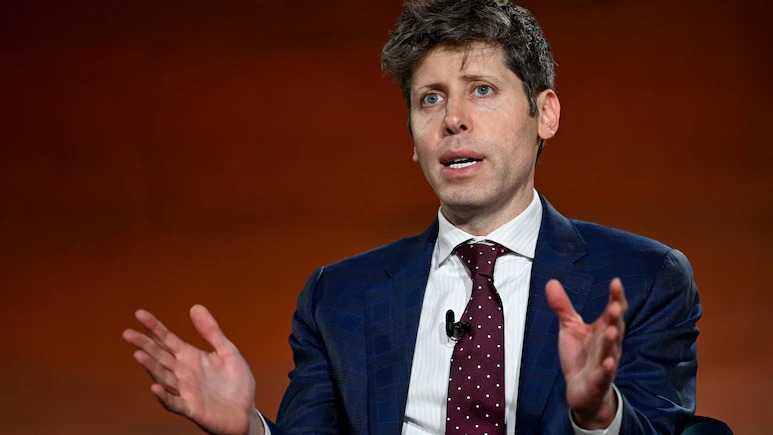
Sam Altman’s $1 Billion Anti-Ageing Bet: How AI And Biology Could Change Human Life Forever
In recent years, artificial intelligence has transformed industries ranging from finance and education to entertainment and software development. But a far more profound revolution may now be taking shape — one that could fundamentally alter human health, ageing, and lifespan itself.
At the centre of this emerging transformation is Sam Altman, the CEO of OpenAI, who is now making one of the boldest investments of his career not in software, but in biology.
Altman has quietly placed a massive financial bet on Retro Biosciences, a biotechnology company focused on extending healthy human lifespan through advanced cellular research and artificial intelligence-driven scientific discovery.
What makes this story remarkable is not just the amount of money involved — reportedly hundreds of millions of dollars — but the larger vision behind it. The convergence of AI and biology could potentially redefine medicine, healthcare, and even the human ageing process itself.
For decades, ageing has been treated as an unavoidable reality of life. Now, some scientists and investors believe it may eventually become something that can be slowed, controlled, or partially reversed.
And AI could be the key that accelerates that future.
The Massive Investment Behind Retro Biosciences
According to reports, Sam Altman personally invested approximately $180 million of his own money to help launch Retro Biosciences.
That alone would make it one of the largest personal biotech investments by a technology entrepreneur in recent years.
But Altman’s involvement did not stop there.
The company later attracted additional large-scale funding, reportedly reaching a valuation of around $5 billion. This signals growing confidence among investors that longevity science — once considered speculative and futuristic — is becoming a serious scientific and commercial field.
Unlike many traditional biotech firms focused on a single drug or disease, Retro Biosciences is pursuing a far more ambitious mission: extending healthy human lifespan by targeting the biological mechanisms of ageing itself.
That goal may sound like science fiction, but researchers believe significant breakthroughs in genetics, stem cell biology, and AI-driven research are bringing humanity closer to understanding the ageing process at a cellular level.
Understanding The Science Of Ageing
To understand why investors like Altman are so interested in longevity science, it helps to understand a basic truth about human health.
Most major diseases are strongly connected to ageing.
Conditions such as Alzheimer’s disease, Parkinson’s disease, heart disease, cancer, diabetes, and osteoporosis become dramatically more common as humans grow older.
Traditional medicine generally treats these illnesses separately. But some scientists now argue that ageing itself may be the root cause connecting many of them.
If researchers can slow biological ageing, they may also reduce the risk of numerous age-related diseases at the same time.
This idea has created enormous excitement in biotechnology circles because it changes the medical approach entirely.
Instead of asking “How do we cure this disease?”, researchers are increasingly asking “How do we slow the biological processes that make disease more likely?”
That shift could eventually transform the future of healthcare.
The Revolutionary Idea Of Partial Cellular Reprogramming
At the core of Retro Biosciences’ research lies one of the most talked-about concepts in modern biology: partial cellular reprogramming.
The idea is based on a groundbreaking scientific discovery that certain proteins can reset mature cells into a younger, more flexible state.
Scientists previously discovered that ordinary adult cells could be converted into stem cells using a small set of genetic factors. This breakthrough completely changed regenerative medicine and earned widespread scientific recognition.
However, fully converting cells into stem cells can be dangerous because the cells lose their original identity and may grow uncontrollably.
Partial cellular reprogramming attempts something far more precise.
Researchers aim to rejuvenate ageing cells, restore youthful cellular function, repair biological damage, and reverse some signs of ageing without fully transforming the cells into stem cells.
In theory, this process could help tissues function more effectively as humans age.
For example, older brain cells may regain healthier activity, damaged tissues could repair more efficiently, inflammation associated with ageing might decrease, and cellular energy production could improve.
Although the science remains experimental, early laboratory studies have produced promising signals that age-related cellular decline may not be completely irreversible.
Why AI Could Become The Ultimate Scientific Accelerator
This is where artificial intelligence enters the story.
Modern biological research generates enormous amounts of data. Scientists must analyse proteins, genes, chemical interactions, molecular structures, and cellular pathways that are far too complex for humans to process efficiently on their own.
AI systems excel at identifying patterns inside massive datasets.
Recognising this opportunity, OpenAI developed a specialised AI model known as GPT-4b micro to assist Retro Biosciences’ research.
The model was specifically trained to help scientists redesign proteins involved in cellular reprogramming.
According to OpenAI researchers, the AI system significantly improved research efficiency by accelerating experimental analysis, suggesting new protein designs, identifying possibilities researchers may not have considered, and reducing trial-and-error laboratory work.
Tasks that once required weeks of manual experimentation reportedly produced results much faster with AI assistance.
This may represent a major turning point in science.
Historically, scientific discovery has often moved slowly because experiments are expensive, time-consuming, and limited by human capacity.
AI changes that equation.
Researchers can now simulate biological systems digitally, test thousands of molecular combinations rapidly, predict protein behaviour, analyse genetic relationships, and generate new hypotheses automatically.
Rather than replacing scientists, AI acts as a powerful collaborative tool that expands human research capabilities.
AI And Biology: The Beginning Of A New Era
The convergence of AI and biotechnology is increasingly being viewed as one of the most important technological shifts of the 21st century.
In the past decade, AI has already demonstrated its ability to write software, generate images, translate languages, analyse legal documents, and automate business operations.
Now, its focus is shifting toward medicine and biological science.
This transition could have even greater consequences than AI’s impact on software industries.
Biology is often described as an “information system” — one built from genes, proteins, and cellular communication networks.
AI is uniquely suited to analysing information-heavy systems.
That means future breakthroughs may emerge in areas such as drug discovery, cancer research, genetic medicine, protein engineering, and longevity science.
Many experts believe this convergence between computation and biology may become one of humanity’s most transformative scientific advances.
The Billionaires Racing To Defeat Ageing
Sam Altman is not alone in pursuing longevity science.
Several major technology investors have entered the field in recent years.
Jeff Bezos has backed Altos Labs, while Peter Thiel has invested in anti-ageing research for years. Venture capital firms are increasingly funding biotech startups focused on lifespan extension.
This growing interest reflects a larger belief inside Silicon Valley: that biology may eventually become programmable in the same way software is programmable today.
If that becomes true, the healthcare industry could undergo a historic transformation.
The Challenges Facing Longevity Science
Despite growing excitement, scientists remain cautious.
Human ageing is extraordinarily complex, and many previous anti-ageing claims have failed to produce meaningful real-world results.
Several major obstacles remain.
Ageing affects nearly every system in the body. Manipulating one biological process may unintentionally disrupt another. What works in mice or laboratory cells may not work safely in humans.
Any treatment designed to alter ageing mechanisms would require years of testing and regulatory approval. Medical authorities would likely demand extensive evidence regarding safety and long-term effects.
Longevity science also raises difficult social questions. Who will have access to these treatments? Could extreme lifespan extension worsen inequality? How would societies adapt economically and politically? What happens if humans live significantly longer lives?
These concerns remain deeply debated among scientists, ethicists, and policymakers.
AI In Healthcare Is Already Expanding
Even outside longevity research, AI is rapidly transforming healthcare systems worldwide.
Hospitals and medical organisations are increasingly experimenting with AI tools for medical documentation, administrative automation, clinical support systems, medical imaging analysis, patient communication, and drug research.
Supporters believe AI could eventually reduce healthcare costs, improve diagnostic speed, expand access to medical expertise, assist doctors in underserved regions, and accelerate medical innovation.
However, critics warn that healthcare AI must be carefully regulated.
Major concerns include patient privacy, data security, algorithmic bias, medical accuracy, and overreliance on automation.
As AI becomes more deeply integrated into medicine, balancing innovation with safety will become critical.
Could Humanity Eventually Slow Ageing?
The biggest question surrounding companies like Retro Biosciences is simple: can humans actually slow biological ageing?
At present, nobody knows.
Some researchers believe major breakthroughs could eventually emerge within the next few decades.
Others argue the complexity of human biology makes dramatic lifespan extension far more difficult than investors hope.
Still, even modest success could have enormous impact.
If scientists could delay age-related diseases by even a few years, the benefits for global health could be extraordinary.
People might live longer healthy lives, enjoy more productive years, experience reduced periods of chronic illness, and maintain better quality of life during old age.
That possibility explains why so many investors are now treating longevity science as one of the most important frontiers in technology.
The Future Of AI And Human Biology
Sam Altman’s investment in Retro Biosciences represents something larger than a financial gamble.
It symbolises a growing belief that artificial intelligence may dramatically accelerate humanity’s understanding of biology itself.
For decades, software transformed the digital world.
Now, AI may begin transforming the biological world.
The implications are enormous.
Future generations may look back on this period as the moment when AI stopped being merely a computational tool and started becoming a scientific engine capable of reshaping medicine, ageing, and perhaps even human lifespan.
Whether Retro Biosciences ultimately succeeds remains uncertain.
But one thing is becoming increasingly clear: the future of medicine may not be built by biology alone.
It may be built by biology and artificial intelligence working together.