
Hyderabad Techie’s Website Helps Families Track Over 600 Missing Nepal Flood Victims
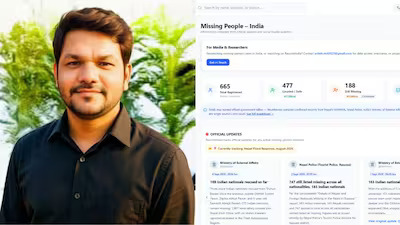
Hyderabad, Telangana: A website developed by Hyderabad-based technology professional Arfath Mohammad is helping families search for missing loved ones in the aftermath of the devastating 2026 Nepal floods. ReuniteIndia.com, an AI-assisted missing-person tracking platform, has helped compile information on 665 individuals reported missing, safe, or located, bringing together updates from multiple official sources and other information channels.
The platform aims to help families find reliable information during emergencies by bringing scattered updates into one place. By combining information from government agencies, disaster management authorities, and social media sources, the website seeks to make it easier for people to search for missing individuals and identify possible leads about their whereabouts.
An Experience That Inspired a Mission
The idea behind Reunite India originated several years ago when Arfath Mohammad witnessed a close friend’s family struggling to locate their father, who had dementia and wandered away from home.
The incident deeply affected Mohammad and made him realise how difficult it can be for families to search for missing loved ones, particularly when information is limited or spread across different sources. Motivated by this experience, he developed a website designed to help people find and track missing individuals.
What began as an effort to address a personal concern has since evolved into a platform that can assist families during large-scale emergencies. Following the 2026 Nepal floods, the website has been used to compile missing-person reports and updates about individuals who have been found or confirmed safe.
Mohammad, a senior solutions architect and programming subject matter expert, designed the website himself, drawing on his technical knowledge to develop a tool intended to address a pressing humanitarian need.
AI-Assisted Platform Brings Scattered Information Together
In disaster situations, families often face considerable difficulties obtaining timely information about missing relatives. Details may be distributed across government announcements, police updates, hospital records, disaster management bulletins, and social media posts. Differences in language and reporting formats can make the search process even more challenging.
ReuniteIndia.com addresses this challenge by using an AI-assisted layer to collate and organise information from multiple sources. According to the information provided about the platform, these include India’s Ministry of External Affairs (MEA), Nepal Police, and Nepal’s National Disaster Risk Reduction and Management Authority (NDRRMA).
By bringing together these updates, the website helps users search across available reports without having to visit multiple sources individually.
The platform has helped list 665 individuals reported missing, safe, or located. Of these, around 477 people were listed as located or safe, based on the information compiled through the platform.
These figures represent the website’s reported listings and should not necessarily be interpreted as independently verified final outcomes for every missing-person case.
Families Can Submit Missing-Person Reports
An important feature of Reunite India is that families and individuals can submit cases directly through the website. This allows people searching for relatives to share relevant information and potentially connect their reports with updates already available on the platform.
Mohammad told THE WEEK that he personally checks each data entry before publishing it. This manual review process is intended to help assess submitted information before it appears on the website.
The combination of AI-assisted information gathering and human review is particularly relevant during emergencies, when reports may be incomplete, duplicated, outdated, or difficult to verify. Careful checking is important to reduce confusion and prevent families from relying on inaccurate information.
The platform’s approach demonstrates how technology can help organise large volumes of information while retaining a human review process for submitted cases.
Helping Families Identify Nearby Hospitals and Police Stations
Beyond compiling reports, Reunite India offers additional support to people trying to locate missing relatives. The website can help identify hospitals and police stations near the last known location of the missing person.
This feature may help families identify places where they can make enquiries and seek further information. In emergencies, knowing which nearby institutions to contact can be valuable, particularly when families are unfamiliar with the affected area.
The platform also provides guidance on filing a missing-person case for people who require assistance with the process.
By bringing search information, location-related assistance, and reporting guidance together, the website aims to make the search process more accessible to families navigating a stressful and uncertain situation.
Breaking Language Barriers During Disaster Response
Language can become a significant obstacle when families search for missing individuals in another country. Official updates, local reports, and social media posts may be published in different languages, making it difficult for people to identify relevant information quickly.
Reunite India seeks to address this challenge by collating information regardless of the language in which it appears. Its AI-assisted approach is designed to help organise information from different sources into a more accessible format.
This capability is particularly relevant in cross-border emergencies such as the Nepal floods, where affected individuals, their relatives, and those searching for them may be located in different countries.
Making information easier to discover can help families identify potential leads and determine which official agencies or local institutions they may need to contact.
However, AI-assisted information should be treated as a starting point for a search rather than definitive confirmation of a person’s identity, location, or safety. Official confirmation remains important before families make decisions based on a reported match.
Technology with a Humanitarian Purpose
Reunite India illustrates how software development and AI-assisted information processing can be applied to a humanitarian challenge. While technology platforms cannot replace the work of police departments, emergency responders, hospitals, or government authorities, they can help make dispersed information easier to access and understand.
For families searching for missing relatives, even a small piece of reliable information can provide a valuable lead. Bringing updates together in one place may reduce the effort required to navigate multiple websites and announcements.
Mohammad’s experience also highlights how personal experiences can inspire technology solutions with broader social applications. His decision to develop the website followed witnessing a family struggle to locate a vulnerable relative. The platform’s use during the Nepal floods has extended that original idea to a much larger emergency.
The project demonstrates the potential of combining technical expertise, information management, and a focus on public needs to address real-world problems.
A Digital Resource for Missing-Person Searches
As Reunite India continues to compile information related to the 2026 Nepal floods, its reported listings offer a centralised resource for people seeking updates about missing individuals. Its features include AI-assisted information collation, manually reviewed entries, public case submissions, nearby hospital and police station identification, and guidance on reporting missing persons.
The reported compilation of 665 individuals, including around 477 listed as located or safe, reflects the scale of information assembled by the platform.
For families facing uncertainty during a disaster, accessible information and clear reporting guidance can be important parts of the search process. Reunite India represents an example of how technology can support these efforts by helping organise available information and directing users towards potential sources of assistance.
0 Comments