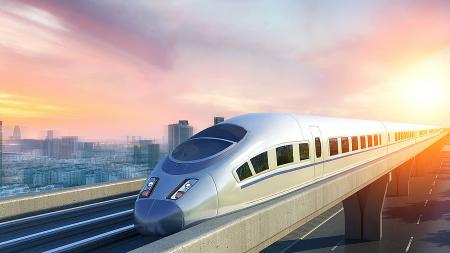
India’s high-speed rail ambitions just moved from blueprint to ground truth.
Three months after the Union Budget announced transformative bullet train projects connecting Bengaluru to Chennai and Hyderabad, the Indian Railways and **National High Speed Rail Corporation Limited **(NHSRCL) have released detailed alignment plans—marking a critical milestone toward faster, cleaner, and more connected mobility across South India.
Announced on May 6, 2026, these alignments aren’t just lines on a map. They represent years of feasibility studies, stakeholder consultations, and engineering preparation—and they signal that India’s high-speed rail revolution is accelerating beyond the Mumbai-Ahmedabad corridor.
🗺️ Route Snapshots: Where the Trains Will Run
🚉 Bengaluru–Chennai Corridor (306 km)
| Segment | Key Details |
|---|---|
| Start/End | Baiyappanahalli (Bengaluru) → Chennai Central |
| Karnataka Stretch | 100.7 km; passes through Whitefield, Kodihalli (Hoskote), Kolar |
| Andhra Pradesh | Chittoor station |
| Tamil Nadu | Parandur (near proposed second Chennai airport), Poonamalle |
| Land Required | ~1,359 hectares in Karnataka |
| Bengaluru Tunnel | 15.94 km underground section to minimize urban disruption |
| Projected Travel Time | ~1 hour 13 minutes (vs. ~4+ hours currently) |
🚉 Bengaluru–Hyderabad Corridor (607 km)
| Segment | Key Details |
|---|---|
| Start/End | Bengaluru → Shamshabad (Hyderabad Airport) |
| Karnataka Stations | Kodihalli, Devanahalli (near Kempegowda International Airport), Alipur (Chikkaballapur) |
| Andhra/Telangana Stations | Hindupur, Anantapur, Gooty, Dhone, Kurnool, Mannanur, Bharat City (planned township), Hyderabad Airport |
| Land Required | ~237.5 hectares in Karnataka |
| Projected Travel Time | ~2 hours (vs. ~5–6 hours currently) |
🚉 Bengaluru–Mysuru Corridor (~157 km) – Approximate Alignment
While not included in the Union Budget announcement, an indicative alignment has been shared: ✅ Stations at Mandya, Ramanagara, Kengeri, Electronics City (near Huskur)
✅ Connects to Chennai corridor at Kodihalli
✅ Strong advocacy from Mysuru-Kodagu MP for formal inclusion
“Mysuru ticks all the boxes, including economics. We are hopeful that a decision on including Mysuru will be taken soon.”
— Yaduveer Krishnadatta Chamaraja Wadiyar, MP, Mysore-Kodagu
🔧 Engineering Highlights: What Makes These Corridors Unique?
| Feature | Purpose & Benefit |
|---|---|
| Tunneling in Bengaluru | 15.94-km underground section minimizes land acquisition, reduces urban disruption, and preserves surface connectivity |
| Airport Integration | Devanahalli (Bengaluru) and Shamshabad (Hyderabad) stations enable seamless air-rail intermodality |
| Elevated/At-Grade Design | Outside dense urban cores, elevated tracks reduce right-of-way conflicts and enable grade-separated crossings |
| B-28 “Bharat-made” Trainsets | Indigenous high-speed trainsets manufactured by BEML in Bengaluru—supporting Make in India and local supply chains |
| LiDAR & Impact Studies Completed | Topographic, traffic, social, and environmental assessments de-risk early project phases |
🎯 Why This Matters: Beyond Speed
High-speed rail isn’t just about cutting travel time. It’s a catalyst for broader transformation:
| Impact Area | How Bullet Trains Deliver Value |
|---|---|
| Economic Integration | Faster movement of talent, goods, and ideas strengthens regional innovation ecosystems (Bengaluru tech + Chennai manufacturing + Hyderabad pharma) |
| Urban Decongestion | Reduced road and air traffic pressure on congested corridors; potential for transit-oriented development around new stations |
| Decarbonization | Electric high-speed rail emits ~80% less CO₂ per passenger-km than air travel; supports India’s net-zero commitments |
| Job Creation | Construction, operations, maintenance, and ancillary services generate thousands of skilled jobs across three states |
| Tourism & Accessibility | Day-trip viability between major cultural/heritage destinations (e.g., Bengaluru–Mysuru–Chennai triangle) |
🗓️ What’s Next? Timeline & Milestones
| Phase | Status | Expected Timeline |
|---|---|---|
| Alignment Finalization | ✅ Published | May 2026 |
| Land Acquisition & Surveys | 🔄 In progress (LiDAR, social/environmental studies completed in Kolar) | 2026–2027 |
| Groundbreaking / Civil Works | ⏳ Pending land finalization and financing closure | ~2027–2028 |
| Systems Installation & Testing | ⏳ Follows civil completion | ~2030–2032 |
| Commercial Operations | ⏳ Dependent on integrated readiness | ~2033–2035 (estimated) |
“The required properties have been identified. Kolar will get one station. The groundwork is expected to start around 2027–28.”
— M. Mallesh Babu, MP, Kolar
⚠️ Reality Check: India’s first high-speed rail project (Mumbai–Ahmedabad, 508 km) was approved in 2014 and is expected to fully open in late 2029. Bullet train projects have long gestation periods due to land acquisition, technical complexity, and financing scale. Patience—and persistent execution—are essential.
💡 Key Considerations for Stakeholders
| For… | Watch This |
|---|---|
| Real Estate Developers | Station area development opportunities; transit-oriented zoning changes |
| Local Governments | Coordination on last-mile connectivity, utility relocation, and urban planning integration |
| Businesses | Talent mobility gains; logistics optimization for time-sensitive supply chains |
| Environmental Groups | Monitoring of ecological impact assessments, tree compensation, and noise mitigation measures |
| Commuters | Future fare structures, booking integration with existing rail/air networks, and accessibility features |
🌱 Sustainability by Design
These corridors embed climate responsibility into core planning:
♻️ Electric traction – Zero direct emissions; compatible with India’s growing renewable energy mix
♻️ Modal shift potential – Attracting passengers from cars and short-haul flights reduces overall transport emissions
♻️ Land-use efficiency – Elevated/tunneled design minimizes surface footprint vs. highway expansion
♻️ Local manufacturing – BEML’s Bengaluru-based trainset production reduces import dependence and transport emissions