Skip to content Skip to left sidebar Skip to right sidebar Skip to footer

Tag: #MadeInIndia

SHREE Opens First Retail Store in Hyderabad, Plans 20-25 More Outlets Across Telangana

Hyderabad, September 6, 2026: In a significant expansion move, SHREE, a leading women’s ethnic wear brand, has officially opened its first retail outlet in Hyderabad at TNR North City Mall. This marks the brand’s entry into the Telangana market, with ambitious plans to establish a strong retail footprint across the state.

Grand Launch and Store Details

The new 1,500 sq. ft. store was inaugurated on Sunday by Femina Miss India Telangana 2026, Ramya Kailasa, alongside SHREE co-founders Sandeep Kapoor and Sheetal Kapoor. The store showcases SHREE’s extensive range of women’s ethnic and contemporary wear, offering customers a premium shopping experience in a spacious, well-designed retail environment.

Aggressive Expansion Plans

SHREE is not stopping at just one store. The brand has announced plans to open 20 to 25 additional stores across Telangana over the next two years, with the goal of strengthening its retail presence in the state by 2028. This aggressive expansion strategy underscores the company’s confidence in Hyderabad’s growing retail market and the evolving needs of working women in the region.

Product Range and Craftsmanship

The Hyderabad outlet features SHREE’s comprehensive collection, including:

  • Sarees
  • Kurtas and kurta sets
  • Kurtis and tunics
  • Co-ords and wide-leg pants
  • Leggings

The collections are crafted from premium fabrics such as cotton, linen, Banarasi silk, and chiffon, all designed in-house under the brand’s private label. This focus on quality fabrics and in-house design ensures that SHREE maintains control over both the aesthetic and the craftsmanship of its products.

Leadership Perspectives

Confidence in Telangana’s Market

Sandeep Kapoor, Chairman and Managing Director of SHR Lifestyles Private Limited, expressed optimism about the expansion:

“The company was confident about expanding in Telangana based on its existing online customer base.”

He also highlighted the broader socioeconomic impact of the expansion:

“The planned expansion would also create employment opportunities and support local tailoring units and skilled artisans.”

Meeting the Needs of Modern Women

Co-founder Sheetal Kapoor emphasized why Hyderabad was a strategic choice:

“Hyderabad’s growing retail market and the evolving needs of working women made the city an important market for the brand.”

She also pointed out the unique value of a physical retail presence:

“The physical store would allow customers to experience the fit and fabrics of the collections, something that online shopping could not fully provide.”

Strategic Context: From Online to Omnichannel

SHREE’s entry into Hyderabad represents a classic omnichannel strategy. The brand already has an established online customer base in Telangana, which provided the data and confidence to invest in physical retail. By opening brick-and-mortar stores, SHREE is addressing a key limitation of e-commerce: the inability to touch, feel, and try on ethnic wear before purchase.

This hybrid approach allows the brand to:

  • Build stronger customer relationships through in-person experiences
  • Reduce return rates by allowing customers to check fit and fabric quality
  • Create brand awareness and visibility in a competitive market
  • Support local employment and artisan communities

SHREE’s National and Global Footprint

With this Hyderabad launch, SHREE now operates more than 130 stores across India and in overseas markets. The brand has positioned itself as a key player in the women’s ethnic wear segment, competing with both traditional retailers and modern D2C (direct-to-consumer) brands.

Looking Ahead

As SHREE embarks on its ambitious Telangana expansion, the brand is well-positioned to capitalize on several favorable trends:

  • The growing purchasing power of working women in Tier-1 and Tier-2 cities
  • The increasing demand for high-quality, affordable ethnic wear
  • The shift toward organized retail in the ethnic fashion segment
  • Hyderabad’s emergence as a major retail and technology hub

With 20-25 stores planned by 2028, SHREE is betting big on Telangana. If successful, this expansion could serve as a blueprint for entering other high-growth Indian states.
Apple to double Air Pods production in India as Foxconn expands Hyderabad plant

Foxconn’s expansion of its Hyderabad facility and the plan to double AirPods production is a key part of Apple’s strategy to reduce its reliance on China and strengthen its manufacturing base in India. The investment is a direct response to global supply chain challenges, geopolitical risks, and Apple’s push to diversify its production footprint.

By early 2026, the Hyderabad facility is set to double its output, increasing AirPods production from 100,000 units per month to 200,000. This move will not only boost Apple’s capacity but also solidify India’s growing role in its global supply chain. Foxconn is even transferring advanced machinery from its Vietnam plants to support this ramp-up, with the company planning to retool five production lines for future AirPods models.

The expansion isn’t just about scaling up; it also means adding around 3,000 new jobs, growing the workforce from 2,000 to 5,000. This aligns with Apple’s broader vision to turn India into a key manufacturing hub for not only AirPods but also accessories and components for other brands.

Apple’s commitment to India has grown steadily over the years, with the country now playing a significant role in its production of products beyond iPhones, such as AirPods and other accessories. The investment also helps Apple mitigate risks tied to supply chain disruptions—like earlier this year, when China’s export restrictions on rare earth minerals temporarily impacted AirPods production.

This expansion in Hyderabad is part of a larger effort to turn India into a major audio manufacturing hub, and it complements another initiative in Tamil Nadu, where Jabil is building a new facility to produce AirPods cases. With this growing capacity, India’s position in Apple’s global supply chain is only set to increase.

In the long term, the move to India isn’t just about short-term production needs but a strategic shift to reduce Apple’s dependency on China. What do you think this means for India’s tech industry in the coming years?

Source: Hindustan Times

Pochampally Ikkat: A Tradition in Transition

Pochampally: The Looms of Legacy and the Future of Ikkat Weaving
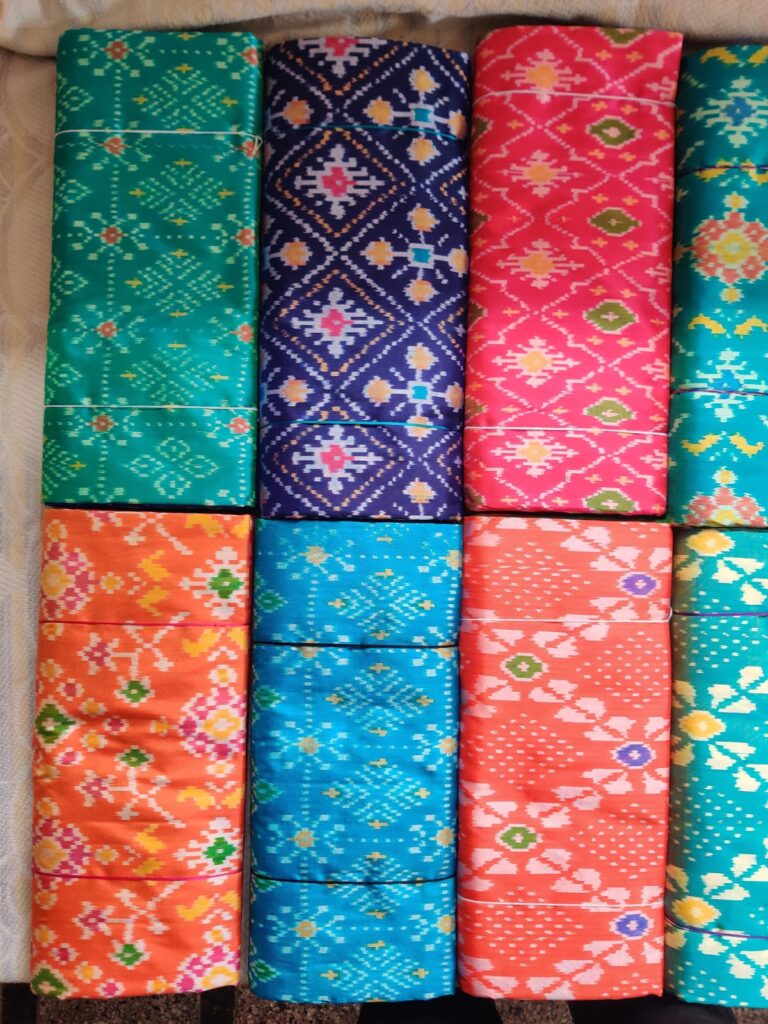
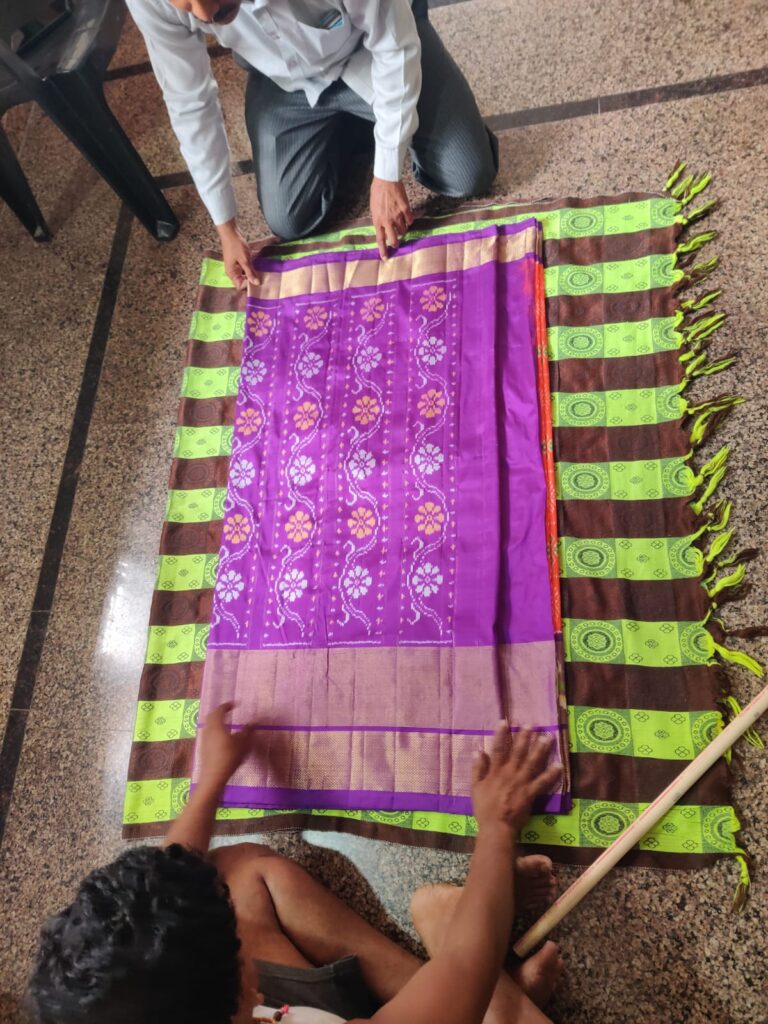
Nestled in the heart of Telangana, the town of Pochampally is world-renowned for its mesmerizing Ikkat patterns and exquisite handwoven sarees. Often dubbed as the “Silk City of India”, Pochampally’s weavers blend tradition and precision in a complex textile art that has earned a Geographical Indication (GI) tag and global recognition.

The Step-by-Step Process of Making a Pochampally Ikkat Saree

  1. Collection and Preparation of Yarn
    The process begins with sourcing cotton or silk yarns, typically procured from mills in nearby towns like Hyderabad or Warangal.

Degumming and Bleaching: For silk, the raw yarn is degummed and bleached.

Drying: The cleaned yarn is dried before dyeing begins.

  1. Designing and Marking the Pattern
    Pochampally’s magic lies in its “tie and dye” resist technique. Patterns are designed on graph paper, and each color and section is meticulously calculated.
  2. Tying the Yarn (Resist Dyeing)
    This step, called “Bandhana”, involves:

Tying sections of yarn tightly with threads to prevent dye penetration.

These areas remain undyed during the dyeing process, creating intricate patterns.

  1. Dyeing the Yarn
    Yarns are dipped in dye vats (using natural or synthetic dyes).

The process is repeated for multiple colors, drying and retying in between.

This phase demands immense precision, as the final pattern must align perfectly when woven.

  1. Warping and Loom Preparation
    Once dyed, yarns are set up on the warp beam (longitudinal threads). The loom is then calibrated manually to match the design specifications.
  2. Weaving the Fabric
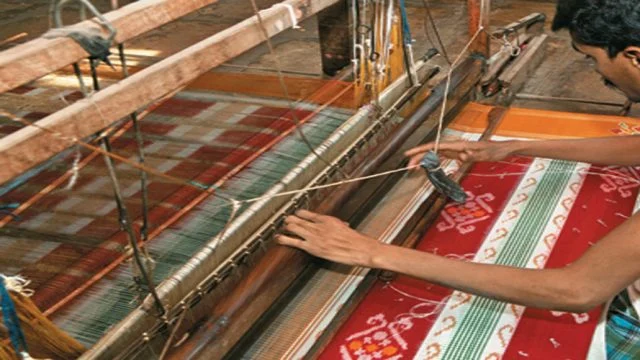
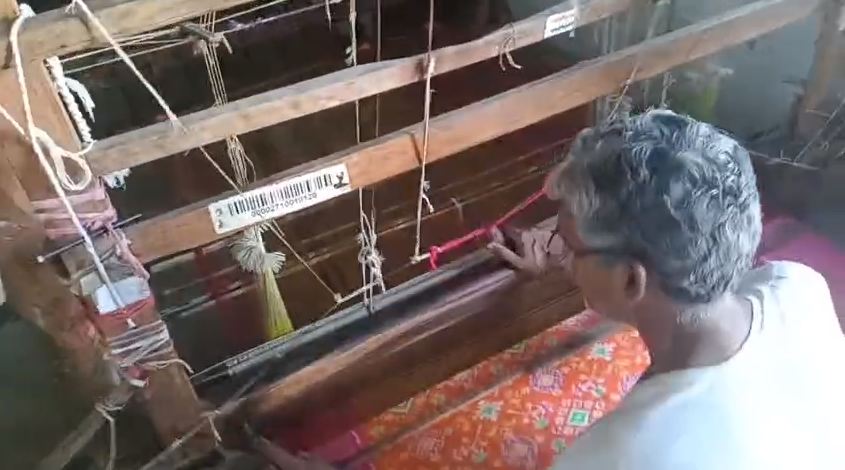
    Using pit looms or frame looms, weavers interlace the dyed yarns into complex, colorful patterns.

The weft (horizontal threads) and warp (vertical threads) need to match precisely.

Each saree can take 7–10 days depending on the complexity of the design.

Challenges Faced by Pochampally Weavers
Despite the beauty and demand of their craft, Pochampally weavers face multiple hardships:

  1. Declining Profits
    Middlemen often take the lion’s share of profits.

Fluctuations in raw material prices (especially silk) impact earnings.

  1. Lack of Market Access
    Limited reach to national and international markets.

Dependence on government exhibitions or state-run emporiums.

  1. Labour-Intensive Process
    The intricate dyeing and weaving process is time-consuming and physically taxing.

Younger generations are migrating to urban jobs, leading to a decline in skilled artisans.

  1. High Cost of Modernization
    Power looms and automatic dyeing machines are costly.

Many weavers cannot afford to invest without external help.

Financial Support: Loans and Schemes
The government and cooperative societies have introduced various aids:

  1. Weaver Credit Card (WCC) Scheme
    Offers loans up to ₹2 lakhs at subsidized interest.

Helps in purchasing raw materials, looms, and other necessities.

  1. Mudra Loans
    Offered under Pradhan Mantri MUDRA Yojana.

Enables micro-financing for artisan-led enterprises.

  1. Cooperative Societies and DWCRA Groups
    Help in bulk procurement, marketing, and fair pricing.

Provide weavers with basic wages and shares in profits.

  1. Handloom Weavers Comprehensive Welfare Scheme
    Covers insurance, health, and pension benefits for registered weavers.

Innovative Ideas to Boost Productivity and Sustainability
To keep the legacy of Pochampally alive, a blend of traditional skill and modern innovation is key.

  1. Digital Design and CAD Tools
    Use of Computer-Aided Design (CAD) tools for pattern-making.

Helps weavers replicate and innovate faster with fewer errors.

  1. Solar-Powered Looms
    Reduces dependency on erratic power supply.

Cuts energy costs and boosts working hours.

  1. E-commerce and Direct-to-Customer Models
    Platforms like Amazon Karigar, GoCoop, and personal websites enable weavers to reach global buyers.

Eliminates middlemen and improves profit margins.

  1. Skill Development and Youth Training
    Government and NGOs offer training in dyeing, modern weaving techniques, and digital literacy.

Attracts younger generation to continue the craft.

  1. Sustainable and Eco-Friendly Practices
    Adoption of natural dyes, organic cotton, and water-recycling units for dyeing processes.

Appeals to environmentally conscious consumers globally.

Conclusion: Weaving a Brighter Future
Pochampally’s Ikkat is more than just fabric—it’s a tapestry of culture, patience, and artistry. With appropriate financial backing, modern infrastructure, and greater visibility, the skilled hands of Pochampally can continue weaving not just sarees but also a stronger future for their community.