Tag: #IndianCulture

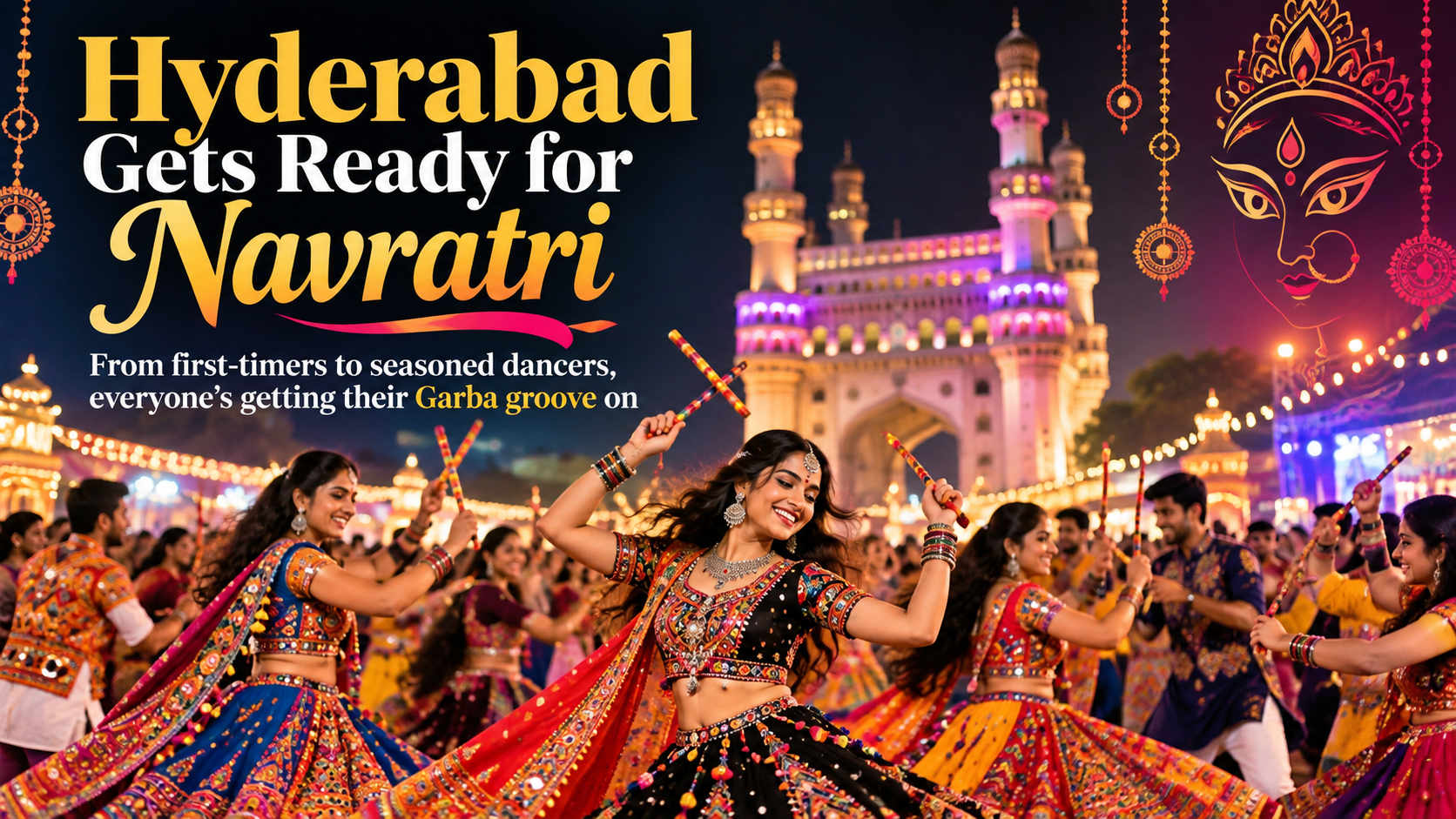
  • Hyderabad Gets Ready for Navratri 2026 with Garba Dance Nights

    Hyderabad Gets Ready for Navratri 2026 with Garba Dance Nights

    Hyderabad, October 2026 – As the festive season approaches, the streets of Hyderabad are echoing with the rhythmic beats of the dhol and the clapping of hands. Navratri is no longer just a regional celebration; it has evolved into a city-wide phenomenon. From Madhapur to Alwal, dance studios and community centers are witnessing an unprecedented surge in enthusiasm as first-timers, seasoned dancers, and even young children gear up for the nine nights of Garba.

    A Melting Pot of Rhythm and Culture

    What makes this year’s Navratri preparations in Hyderabad truly special is the beautiful cultural fusion taking place on the dance floor. Garba is transcending regional boundaries, bringing together people from North Indian, Gujarati, and local Telugu-speaking communities.

    Instructors across the city report a delightful mix of participants. Whether it’s IT professionals unwinding after a long work week, couples learning to coordinate their steps, or children experiencing the magic of the festival for the first time, the dance floor has become a powerful symbol of inclusivity and shared joy.

    Voices from the Dance Floor

    The spirit of Hyderabad’s Garba scene is best captured by the people who bring it to life every day:

    • On Inclusivity: Geeta Agrawal, instructor at 1Hundred Dance Studio in Madhapur, notes, “Garba is not about getting every step perfect; it is about participating, enjoying the music and being part of the experience… What I enjoy seeing is people from different communities and backgrounds coming together to learn garba, understand its culture and experience its energy.”
    • On Tradition: For students like Varsha Goyal, Navratri is a cherished childhood ritual. “Getting dressed up and heading out for garba brings back the same excitement I had as a child,” she shares, as her group of 30 practices daily for the celebrations in Shamshabad.
    • On New Experiences: Kirtee Prajapati, an IT professional, expresses the excitement of a newcomer: “This is my first time attending garba nights in Hyderabad, so I’m really looking forward to experiencing the city’s festive energy. I even come dressed in full Gujarati attire with the jewellery because it makes the whole experience more fun.”
    • On Deepening Understanding: Anchal Toshniwal, choreographer at Aarambh Dance Company in Himayat Nagar, observes a shift in how people learn. “Learners are curious about the rhythm behind every garba step. They ask why we do a particular step and what makes one sequence different from another. They want to understand the dance, not just copy the choreography.”

    Where the Magic is Happening

    The city’s dance infrastructure has risen to the occasion, with specialized workshops popping up across major neighborhoods:

    • 1Hundred Dance Studio (Madhapur): Focusing on weekend workshops that build from basic hand and leg movements to complex formations like teen taali and hinch.
    • Harmony Academy (Kismatpur) & IRA Dance Studios (Alwal): Teaching foundational steps like popat and dakla to popular tracks like Udi Udi Jaye, Chogada, and Dholida.
    • Aarambh Dance Company (Himayat Nagar): Blending traditional choreography with modern social media trends to engage a younger, digitally native audience.

    Strategic and Community Impact

    The booming popularity of Garba in Hyderabad delivers several meaningful impacts:

    1. Cultural Integration: By welcoming diverse communities onto the same dance floor, Garba acts as a vibrant bridge, fostering mutual respect and cultural exchange in a cosmopolitan city.
    2. Community Building: In an era of busy, screen-dominated lives, these classes offer a healthy, offline space for couples, families, and friends to connect, laugh over mistakes, and build teamwork.
    3. Festive Economy Boost: The surge in participation drives significant economic activity, benefiting local vendors selling chaniya cholis, kediyah sets, traditional jewelry, and event management services.
    4. Preservation of Heritage: The growing curiosity about the “why” behind each step ensures that the cultural and historical significance of Garba is preserved and passed on to the next generation.

    Looking Ahead

    As the nine nights of Navratri draw near, Hyderabad is poised to light up with vibrant colors, traditional attire, and infectious energy. Whether you are a seasoned dancer perfecting your sanedo or a first-timer just learning to clap on the beat, the message from Hyderabad’s Garba community is clear: everyone is welcome, and the only requirement is the willingness to celebrate.

    Get your dandiya sticks ready—Hyderabad’s Garba groove is waiting for you!
  • Krishna Janmashtami Fills Hyderabad with Colour, Music and Midnight Prayers

    Krishna Janmashtami Fills Hyderabad with Colour, Music and Midnight Prayers

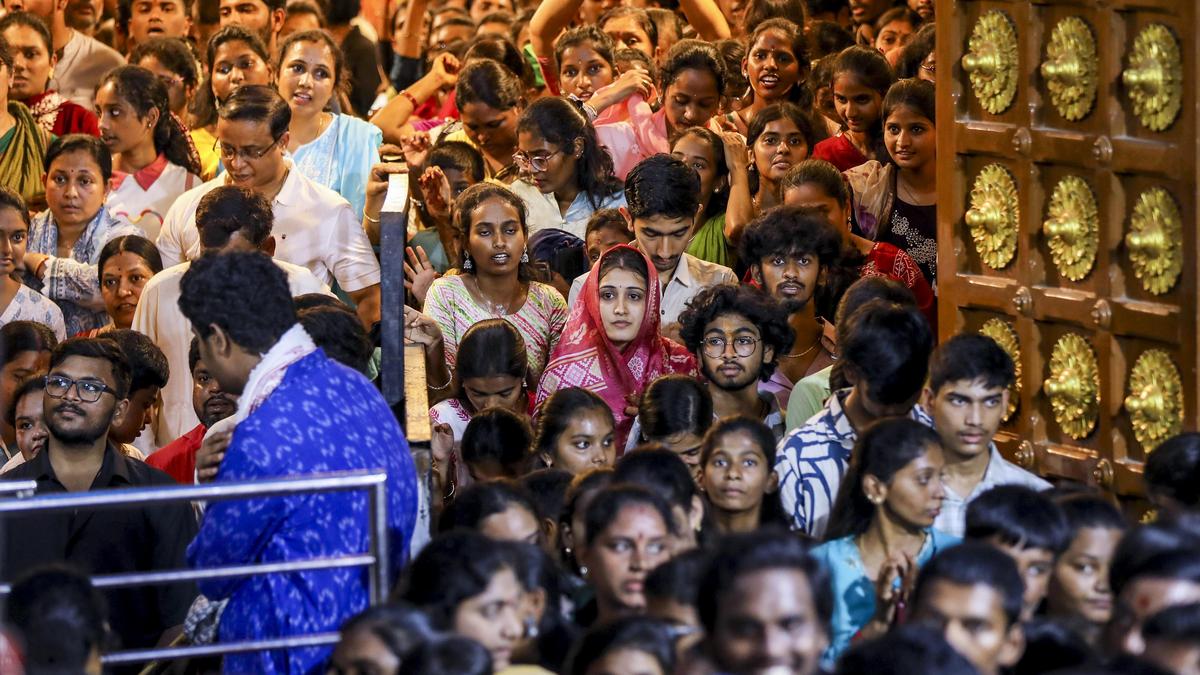
    Peacock feathers rose and fell above bustling crowds, little Krishnas and Radhas padded through temple corridors, and flower-decked cradles waited in quiet anticipation for the midnight hour. Across Hyderabad, Krishna Janmashtami unfolded in a familiar, heartwarming blend of devotion, vibrant color, and childhood wonder, transforming the city into a canvas of spiritual celebration.

    From the first rituals at dawn to the grand abhishekams (sacred baths) that drew devotees toward midnight, temples across the twin cities remained vibrant hubs of activity as people gathered to celebrate the divine birth of Lord Krishna.

    Dawn to Dusk: A Symphony of Devotion

    Long before the city fully woke, Hyderabad’s temples were already stirring to the resonant sound of bells, Vedic chants, and devotional music.

    At the Hare Krishna Golden Temple in Banjara Hills, celebrations kicked off at 4:30 a.m. with the Shodashopachara Seva. The deities, Sri Radha Govinda, were adorned in new vastras (garments), fresh flowers, and specially crafted jewellery. Devotees took turns performing Jhulan Seva, gently rocking the idols of Laddu Gopal and Makhan Krishna in beautifully decorated swings.

    The spiritual momentum continued with Shringara Arati, a Sudharshana Narasimha homa for the welfare of devotees, and the offering of a magnificent Chappan Bhog (56 sacred food preparations). Throughout the day, the air was filled with soulful bhajans and kirtans, accompanied by traditional music and dance, while prasadam flowed steadily to the visiting crowds.

    Highlights Across the City’s Sacred Spaces

    Janmashtami in Hyderabad is not confined to a single location; it is a city-wide phenomenon, with each center offering unique cultural and spiritual experiences:

    • ISKCON Abids: The day began with Mangal Arati at 4:30 a.m., setting a serene tone for a full schedule of Sringar Aarti, Kalasha Abhishekam, and engaging cultural programmes.
    • Exhibition Grounds, Nampally: The celebrations here took on an expansive, community-focused scale. The grounds hosted a vibrant Jhulan Yatra, devotional singing sessions, a Krishna-themed dress competition for children, a traditional boat festival, and intricate sand art displays, all building up to the night’s grand rituals.
    • Hare Krishna Heritage Tower (Narsingi) & Cultural Centre (Kandi, Sangareddy): Devotees gathered throughout the day for Radha Krishna darshan and Laddu Gopal Jhulan. The festivities were further enriched by cultural programmes performed by local school children, adding a youthful energy to the divine proceedings.

    The Midnight Climax: Sacred Rituals and Spiritual Peak

    By evening, the rhythm of the celebrations shifted toward the sacred midnight hour, marking the exact time of Lord Krishna’s birth.

    At the Banjara Hills temple, the Krishna Anugraha Sandhya Abhisheka began at 6 p.m., culminating in a spectacular 108-Kalasha Abhishekam. In this deeply symbolic ritual, the deity was bathed in panchamrita, panchagavya, fruit juices, herbs, and flowers, alongside holy water collected by devotees from the seven sacred rivers of India. Similar Maha Abhishekam and Arati ceremonies were held across major temples, drawing massive crowds who stayed late into the night to witness the divine moment.

    Cultural Significance: Connecting Generations

    While the grandeur of the rituals and the scale of the offerings are impressive, the true heart of Janmashtami in Hyderabad lies in its simpler, more intimate sights.

    It is found in a toddler dressed in a tiny peacock-feather crown, the sound of small feet echoing through a temple hallway, a cradle swaying gently beneath floral ornaments, and the collective, breathless anticipation of midnight. Alongside the elaborate religious ceremonies, it is this profound sense of nostalgia and childhood wonder that continues to connect generations, keeping the timeless legacy of Lord Krishna alive in the hearts of the community.

    Looking Ahead

    As the midnight prayers fade and the festive decorations are gently packed away, the spiritual energy of Janmashtami lingers in Hyderabad. The festival stands as a beautiful testament to the city’s rich cultural fabric, proving that faith, community, and joy can beautifully intertwine to create memories that last a lifetime.

  • 10-Year-Old Bharatanatyam Dancer Ananya Mesmerizes Hyderabad with ‘Navaratnam’ Performance

    10-Year-Old Bharatanatyam Dancer Ananya Mesmerizes Hyderabad with ‘Navaratnam’ Performance

    Hyderabad: A remarkable evening celebrating India’s rich cultural heritage unfolded at Ravindra Bharati, where 10-year-old Bharatanatyam prodigy S.P. Ananya, based in Germany, captivated audiences with her Telangana debut performance, “Navaratnam.”

    The unique Bharatanatyam production explored the spiritual significance, symbolism, and mythology of the nine sacred gemstones (Navaratnas) and their association with the Navagrahas, beautifully blending classical dance, storytelling, music, and Indian tradition into an unforgettable cultural experience.

    A disciple of Guru Veenashri Vijaykumar Alange, Ananya showcased exceptional grace, expressive abhinaya, rhythmic footwork, and remarkable stage presence far beyond her years. Through each performance, she narrated the origin, colors, energies, and cultural importance of gemstones including Ruby, Pearl, Emerald, Yellow Sapphire (Topaz), Diamond, Blue Sapphire, Gomedhika, Vaidurya (Cat’s Eye), and Vidruma (Coral), highlighting their spiritual and astrological significance.

    Adding to the evening’s grandeur was a special violin recital titled “Carnatic Re-imagined” by Ananya’s father, S.P. Subrahmanyam. The performance featured a soulful Ganapati Prarthana in Hamsadhwani, an improvisational presentation in Arabhi, and concluded with a moving tribute to legendary violin maestro Dr. L. Subramaniam, inspired by the iconic Surabhi television theme.

    The family has a distant connection to legendary playback singer S.P. Balasubrahmanyam, while Ananya’s brother, S.P. Shankar, has also earned recognition as a two-time Young Scientist Award recipient, reflecting the family’s dedication to excellence in both arts and academics.

    Speaking about the production, Ananya’s mother Divya Mangala, herself a former classical dancer, said the presentation was designed to inspire younger generations and global audiences to appreciate India’s timeless cultural traditions. By combining mythology, astrology, Carnatic music, and Bharatanatyam, Navaratnam offers a meaningful journey into India’s spiritual and artistic heritage.

    Having travelled from Germany specifically for this performance, Ananya’s Telangana debut highlights the growing enthusiasm among the Indian diaspora to preserve, learn, and showcase India’s classical arts on international platforms.

    The event concluded with heartfelt appreciation from the organizers, who thanked art lovers, students, families, and cultural organizations for supporting an evening dedicated to celebrating India’s classical dance, music, and enduring cultural legacy.

  • India’s Finest Historians Under One Roof at History Literature Festival 2026

    India’s Finest Historians Under One Roof at History Literature Festival 2026

    Hyderabad: The Fourth Edition of the History Literature Festival (HLF) will be held from February 6 to 8, 2026, at The Hyderabad Public School, Begumpet, bringing together some of India’s most eminent historians, archaeologists, academicians, and authors under one roof.

    The festival aims to foster meaningful conversations around India’s rich and complex past, offering a vibrant platform for discussions on history, archaeology, culture, literature, cinema, food, music, and society. Through engaging panel discussions, talks, and interactive sessions, HLF continues its mission of making history accessible beyond academic circles and into public discourse.

    HLF 2026 will showcase diverse perspectives, encouraging dialogue on ideas, discoveries, and debates that continue to shape the understanding of India’s historical narrative. The festival also highlights the importance of critical thinking and storytelling in preserving and interpreting history.

    As part of its broader outreach, the History Literature Festival is documenting its journey through press articles and online coverage, allowing wider audiences to engage with the sessions, conversations, and ideas emerging from the festival.

    With free entry and an inclusive approach, HLF 2026 promises to be a significant cultural and intellectual gathering for history enthusiasts, students, scholars, and the general public alike.

  • Murrah Bulls from Haryana to Steal the Spotlight at Hyderabad’s Sadar Sammelan

    Murrah Bulls from Haryana to Steal the Spotlight at Hyderabad’s Sadar Sammelan

    Hyderabad, Telangana | October 17, 2025 — The vibrant streets of Hyderabad are gearing up for one of the most awaited post-Diwali celebrations — the Sadar Sammelan, also known as Dunnapothula Panduga. This year, the spotlight will shine brightly on a special attraction: Murrah bulls from Haryana, famed for their strength, size, and majestic presence.

    These elite bulls, bred in Haryana and known for their remarkable physique and high milk yield, have arrived in Telangana to participate in the grand cattle parade. Every year, this event brings together farmers, cattle breeders, and animal lovers to celebrate the importance of livestock in rural life.

    The Sadar Sammelan, traditionally held a day after Diwali, showcases beautifully decorated bulls adorned with colorful ornaments, paint, and garlands. The festival highlights the deep cultural bond between farmers and their cattle — symbolizing prosperity, pride, and gratitude for the animals that sustain agricultural livelihoods.

    This year, the Murrah bulls have already become the talk of the town. Their participation is expected to attract thousands of spectators eager to witness the majestic creatures parade through Hyderabad’s bustling streets.

    Organizers say the event is not just about spectacle — it’s also a platform to promote the preservation and appreciation of indigenous and high-quality cattle breeds.

    With rhythmic drumbeats, folk performances, and festive cheers filling the air, the Sadar Sammelan 2025 promises to be a colorful tribute to rural heritage and the enduring relationship between humans and their livestock.

    Source : The News Minute