Tag: #EcoConscious

  • From Cornhusk to Craft: How Parvathi Talvar Turns Farm Waste into Sustainable Art and Rural Women’s Livelihoods 

    From Cornhusk to Craft: How Parvathi Talvar Turns Farm Waste into Sustainable Art and Rural Women’s Livelihoods 

    In rural Karnataka, Parvathi Talvar is turning agricultural waste into beautiful handmade products. From Mudenur in Karnataka’s Vijayanagar district, the artisan and social entrepreneur has built Parva Handicrafts, an initiative that transforms discarded cornhusk into eco-friendly art and useful products.

    Her work combines sustainability, traditional craftsmanship and rural women’s empowerment. What was once agricultural waste is now being given a new purpose through creativity and skilled handwork.

    Turning Cornhusk Waste into Art

    After every harvest, large quantities of cornhusk are left behind in agricultural fields. This waste is often burned or discarded, contributing to pollution and environmental problems.

    Parvathi saw an opportunity in this unused material. Around six years ago, she started Parva Handicrafts with two goals: to convert farm waste into useful products and to create livelihood opportunities for rural women.

    The initiative demonstrates how locally available natural materials can become valuable products through traditional skills and creative thinking.

    What Does Parva Handicrafts Create?

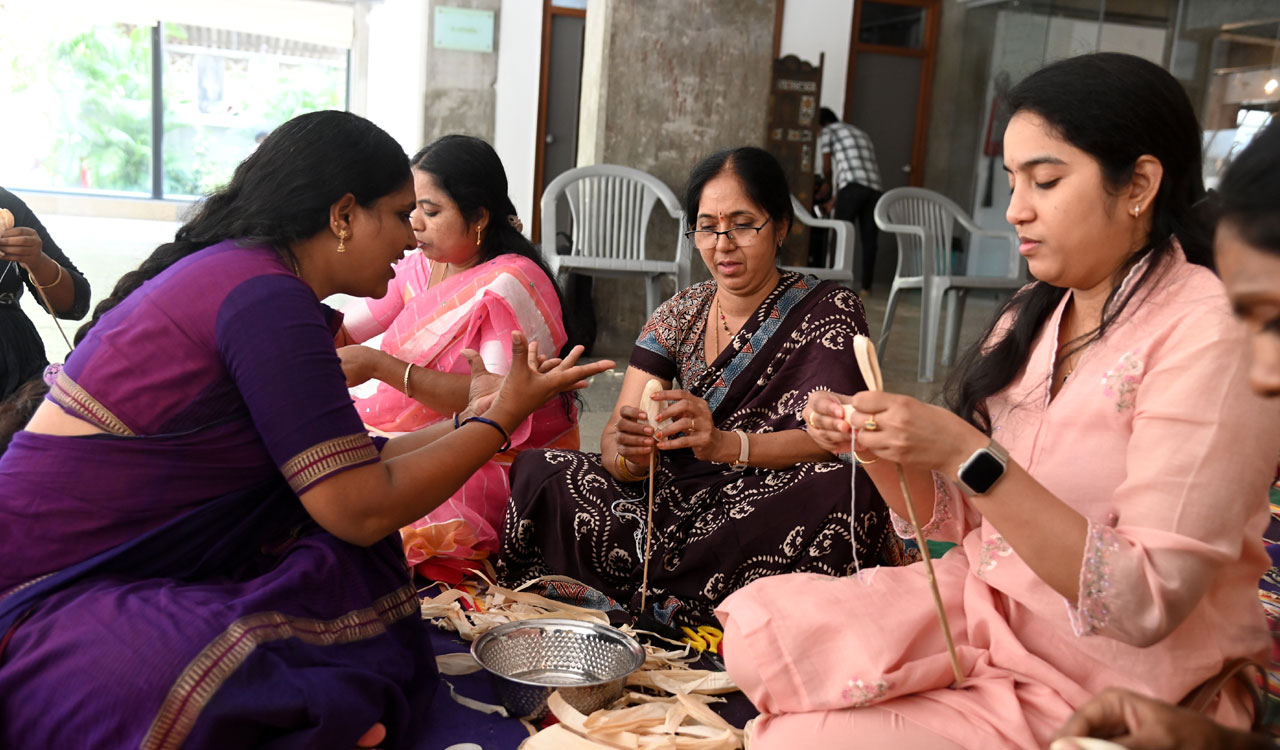
    At Parva Handicrafts, cornhusks are carefully cleaned, dyed and shaped by hand. The material is then woven, folded and crafted into a variety of decorative and functional products.

    The collection includes:

    • Floral art: Handmade flowers, bouquets and decorative peacock feathers.
    • Home décor: Wall hangings, table decorations and decorative wreaths.
    • Functional products: Handwoven baskets and sustainable gift items.

    Each product highlights the creative possibilities of agricultural waste. The handmade approach also gives every piece its own character.

    Supporting Sustainable Craftsmanship

    The work of Parva Handicrafts shows how agricultural waste can become part of a circular economy. Instead of treating cornhusk as something to be discarded, the initiative gives the material a second life.

    Using natural and renewable materials can also provide an alternative to plastic-based and mass-produced decorative products.

    For environmentally conscious consumers, these handmade products offer a way to combine traditional craftsmanship with sustainable living.

    Creating Opportunities for Rural Women

    Parvathi’s vision goes beyond environmental sustainability. A key part of Parva Handicrafts is creating income opportunities for women in rural communities.

    The artisans receive training and work with the materials to create finished products. Access to skills and markets can help women develop greater financial independence and confidence.

    This combination of women’s empowerment and sustainable craftsmanship makes the initiative socially significant as well as environmentally valuable.

    Parvathi Talvar’s Vision for the Future

    Parvathi wants to expand Parva Handicrafts and create opportunities for more rural women.

    Her journey demonstrates that meaningful innovation does not always require advanced technology. Sometimes, it begins with recognising the value of resources that are already available in local communities.

    By transforming cornhusk into handmade products, Parvathi is creating a model that connects agriculture, art, sustainability and rural livelihoods.

    Why Parva Handicrafts Matters

    The growing demand for sustainable and handmade products is creating new opportunities for artisans and social entrepreneurs.

    Parvathi Talvar’s work is a powerful example of how agricultural waste can be transformed into something useful and beautiful. It also shows how traditional skills can support rural livelihoods while encouraging more sustainable ways of producing and consuming goods.

    Parva Handicrafts is not just about making products from cornhusk. It is about giving waste a new purpose, supporting rural women and demonstrating the value of sustainable craftsmanship.

  • No PoP Ganesh Idol Immersion in Hyderabad’s Hussain Sagar

    No PoP Ganesh Idol Immersion in Hyderabad’s Hussain Sagar

    Hyderabad Takes a Green Stand for Ganesh Chaturthi

    As millions of devotees prepare to bid farewell to Lord Ganesha, Hyderabad is making a strong environmental statement. The Hyderabad Police, in collaboration with the Greater Hyderabad Municipal Corporation (GHMC), have launched a comprehensive awareness campaign ahead of Ganesh idol immersion, urging citizens to say “No to Plaster of Paris (PoP)” idols and embrace eco-friendly alternatives.

    The Environmental Crisis: Why PoP Must Go

    For years, the immersion of Ganesh idols made from Plaster of Paris has posed a severe threat to Hyderabad’s iconic Hussain Sagar lake and other water bodies. PoP idols:

    • Take years to dissolve in water
    • Release toxic chemicals and heavy metals
    • Harm aquatic life and ecosystems
    • Pollute water sources used by communities
    • Create long-term environmental damage

    Court Directives Drive Change

    The awareness campaign is rooted in legal mandates aimed at environmental protection:

    Key Court Orders:

    • 2021: Supreme Court allowed PoP idol immersion in Hussain Sagar as a one-time exception
    • 2023: Telangana High Court issued strict directions prohibiting PoP idol immersion in Hussain Sagar and other Hyderabad water bodies
    • Current: Authorities are implementing centralized immersion arrangements to minimize environmental impact

    The High Court has specifically directed officials to: ✅ Avoid PoP idol immersion in water bodies
    ✅ Restrict heavy crane usage on the Upper Tank Bund side
    ✅ Reduce pollution and protect water ecosystems
    ✅ Promote eco-friendly alternatives

    Infrastructure & Arrangements for Eco-Friendly Immersion

    To facilitate the transition to sustainable practices, civic authorities are implementing robust infrastructure:

    Centralized Immersion Points:

    • Location: Necklace Road shoreline of Hussain Sagar
    • Enhanced Facilities: Additional platforms and cranes being installed
    • Purpose: Manage centralized immersion processions efficiently
    • Strategy: Discourage idol movement toward Upper Tank Bund and unrestricted areas

    Awareness Campaign Elements:

    Flex banners at strategic locations
    Informational boards throughout the city
    📢 Barricades at Hussain Sagar and key immersion sites
    📢 Direct notices against PoP idol usage

    Police Appeal to Festival Organizers

    The Hyderabad Police have made a heartfelt appeal to Ganesh festival committees and devotees:

    “Choose eco-friendly idols made from natural clay and biodegradable materials. Follow court orders and immersion guidelines to protect our water bodies for future generations.”

    What Makes an Idol Eco-Friendly?

    • Natural clay (shadu mati) – Traditional, biodegradable
    • Natural colors – Free from chemical dyes
    • Biodegradable decorations – Flowers, leaves, natural materials
    • No plastic or synthetic accessories

    The Bigger Picture: Balancing Faith & Environment

    This initiative represents a crucial balance between religious devotion and environmental responsibility. Hyderabad’s approach demonstrates that:

    • Tradition can evolve with environmental consciousness
    • Devotion doesn’t require destruction of nature
    • Community cooperation can drive positive change
    • Legal frameworks support sustainable practices

    What Devotees Can Do

    Before Immersion:

    1. Choose idols made from natural clay
    2. Avoid PoP and chemical-based decorations
    3. Verify that your idol is eco-friendly certified

    During Immersion:

    1. Use designated immersion points
    2. Follow police and civic authority guidelines
    3. Participate in organized processions
    4. Avoid unauthorized water bodies

    After Immersion:

    1. Report illegal PoP idol immersion
    2. Encourage others to go green
    3. Participate in cleanup drives

    The Impact: Protecting Hussain Sagar

    Hussain Sagar, Hyderabad’s iconic heart-shaped lake, has suffered from pollution for decades. By eliminating PoP idol immersion:

    • Water quality improves significantly
    • Aquatic life thrives without toxic exposure
    • Lake ecosystem recovers naturally
    • Future generations inherit cleaner water bodies

    A Model for Other Cities

    Hyderabad’s proactive approach serves as a blueprint for other Indian cities grappling with festival-related pollution. By combining:

    • Legal enforcement
    • Public awareness
    • Infrastructure development
    • Community engagement

    The city is proving that large-scale religious celebrations can coexist with environmental protection.

    Conclusion: A Call to Action

    As Ganesh Chaturthi 2026 unfolds, Hyderabad stands at a crossroads. The choice between convenience and conscience, between tradition and transformation, rests with every devotee, every festival organizer, and every citizen.

    The “No PoP” campaign is more than just a restriction—it’s an invitation to: 🌱 Embrace sustainable traditions
    🌱 Protect our natural heritage
    🌱 Celebrate with consciousness
    🌱 Honor Lord Ganesha by protecting His creation

    This Ganeshotsav, let’s immerse our faith in devotion, not our lakes in pollution. Jai Ganesh! 🙏


    How to Participate:

    • Report violations: Contact Hyderabad Police or GHMC
    • Buy eco-friendly: Support local artisans making clay idols
    • Spread awareness: Share this message with your community
    • Lead by example: Choose green, immerse clean

    Together, we can make Hyderabad’s Ganesh immersion a celebration of both faith and environmental stewardship.

  • Nagole 72-Foot Eco-Friendly Ganesh Idol to Be Immersed at Site

    Nagole 72-Foot Eco-Friendly Ganesh Idol to Be Immersed at Site

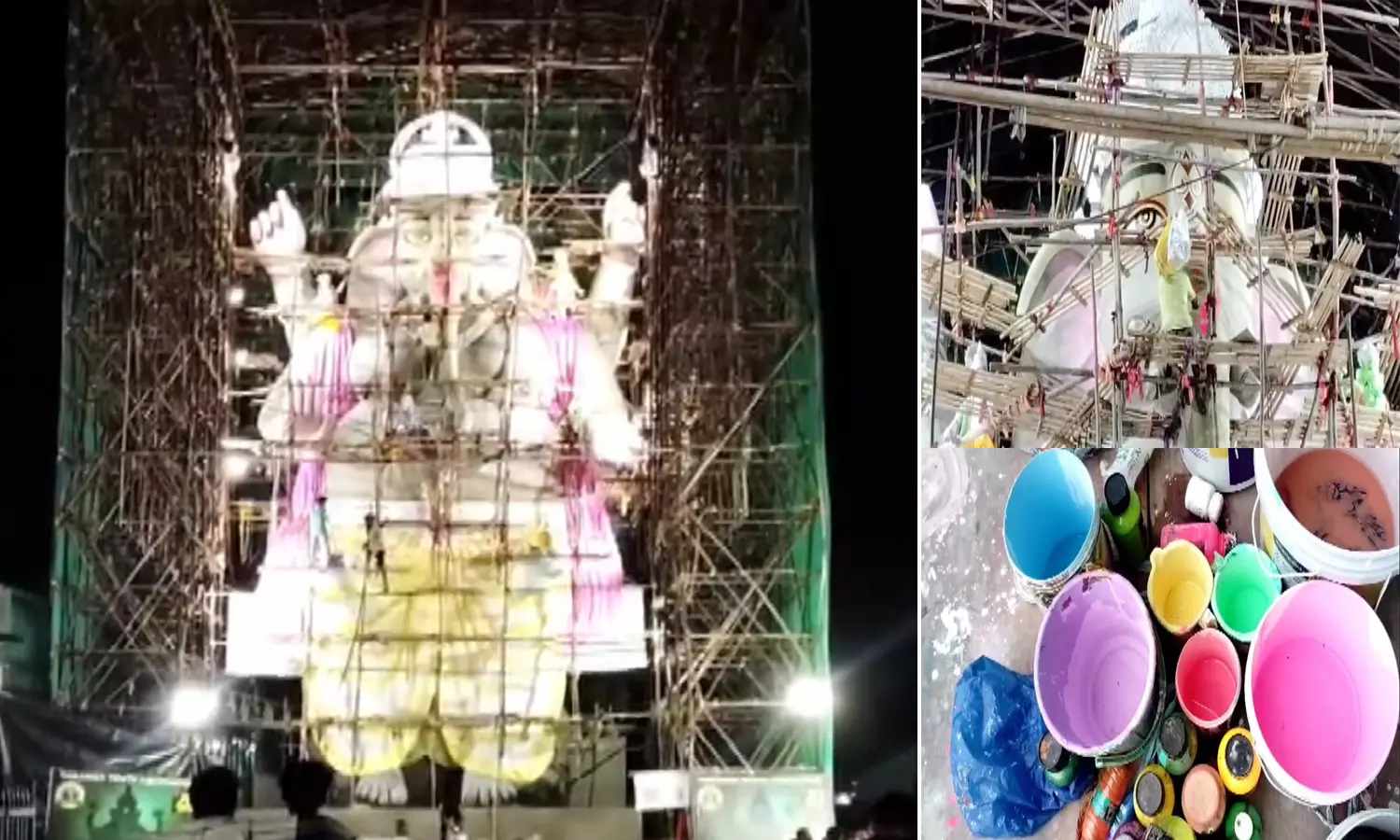
    Hyderabad, September 2026 – As Ganesh Chaturthi 2026 approaches, the historic neighborhood of Nagole in Hyderabad is preparing to unveil a truly remarkable celebration of faith and environmental responsibility. The Tiranga Youth Association is installing a colossal 72-foot eco-friendly Ganesha idol, named Shri Ashta Siddhi Mahaganpati, crafted entirely from natural materials with a groundbreaking zero-waste immersion plan.

    A Monument to Sustainability

    Standing tall at 72 feet, this year’s idol is not just a marvel of devotion but a testament to sustainable festival practices. In a city where Plaster of Paris (PoP) idols and chemical-laden colors have long plagued water bodies, Nagole’s initiative offers a refreshing, eco-conscious alternative.

    Key Features of the Idol:

    • 100% Natural Materials: Constructed using Ganga clay, grass, wood, and watercolors—absolutely no chemicals or PoP
    • Artisan Craftsmanship: Built by 20 skilled artisans brought in from West Bengal, working day and night for two and a half months
    • Massive Scale: At 72 feet, it’s one of the tallest eco-friendly idols in the region
    • Investment in Tradition: The project cost approximately Rs 50 lakh, reflecting the community’s commitment to both scale and sustainability

    Revolutionary Immersion Plan: Zero Pollution, 100% Reuse

    What truly sets this initiative apart is its innovative approach to immersion (Nimajjanam). Unlike traditional immersions that contribute to water pollution, the Nagole organizers have devised a closed-loop, eco-friendly system:

    1. On-Site Immersion: The idol will be immersed at the same location where it is installed, eliminating the need for transportation to lakes or rivers
    2. Clay Redistribution: After immersion, the clay will not be discarded into water bodies. Instead, it will be distributed among devotees for reuse
    3. Zero Environmental Impact: This ensures that no harmful residues enter Hyderabad’s already stressed water ecosystem

    This model represents a gold standard for sustainable Ganesh celebrations, demonstrating that devotion and environmental stewardship can coexist beautifully.

    Voices from the Organizers

    Sai Mudiraj, one of the lead organizers, emphasized the project’s eco-credentials:

    “This year, a 72-foot Shri Ashta Siddhi Mahaganpati idol is being installed here. The idol is completely eco-friendly, and no chemicals or Plaster of Paris have been used in its making. We are using grass, wood, Ganga clay and watercolors.”

    Kotakonda Nagesh, another organizer, highlighted the logistics and sourcing:

    “The material and clay were sourced from Kolkata and colored entirely with watercolors. The construction took around two and a half months, with 21 workers labouring day and night.”

    Upendra Gupta, also part of the organizing team, noted the spiritual and community dimensions:

    “Around 20 artisans were brought from West Bengal specifically for this work. The puja rituals will be performed according to traditional scriptures, and the celebrations are expected to draw around 10,000 devotees daily for darshan.”

    A Tradition of Eco-Consciousness

    The Tiranga Youth Association has been championing this eco-friendly idol-making tradition for nearly two decades, making Nagole a beacon for sustainable Ganesh Chaturthi celebrations in Hyderabad. Their consistent commitment has inspired countless other communities to adopt similar practices.

    Why This Matters for Hyderabad

    Hyderabad’s lakes and water bodies have long suffered from the annual pollution spike caused by Ganesh immersions. Chemical-laden idols and synthetic colors contaminate water sources, harm aquatic life, and degrade groundwater quality.

    The Nagole model offers a scalable solution:

    • Protects Water Bodies: By avoiding immersion in natural lakes and rivers
    • Promotes Circular Economy: Reusing clay reduces waste and the demand for new raw materials
    • Raises Awareness: Demonstrates that large-scale celebrations can be environmentally responsible
    • Sets a Precedent: Encourages other communities and organizations to adopt similar zero-waste practices

    Festival Details

    • Start Date: September 14, 2026 (Ganesh Chaturthi)
    • Duration: 12 days of celebrations
    • Expected Footfall: Approximately 10,000 devotees daily
    • Location: Nagole, Hyderabad
    • Idol Name: Shri Ashta Siddhi Mahaganpati

    Looking Ahead: A Blueprint for the Future

    As the 12-day festival unfolds, Nagole’s 72-foot eco-friendly idol will stand not just as an object of worship but as a powerful symbol of what’s possible when tradition meets innovation. The Tiranga Youth Association’s initiative proves that scale and sustainability are not mutually exclusive.

    By choosing to immerse the idol on-site and redistribute the clay for reuse, they are sending a clear message: true devotion respects the environment that Lord Ganesha himself embodies.

    This year, as thousands of devotees flock to Nagole for darshan, they will witness more than just a magnificent idol—they will see a vision of the future where festivals celebrate both faith and the planet.

    Ganpati Bappa Morya! Mangal Murti Morya!

  • Telangana Governor Shiv Pratap Shukla Urges Eco-Friendly Ganesha Idols

    Telangana Governor Shiv Pratap Shukla Urges Eco-Friendly Ganesha Idols

    Hyderabad – As the vibrant festival of Ganesh Chaturthi approaches, Telangana Governor Shiv Pratap Shukla has issued a heartfelt appeal to citizens, urging them to celebrate the auspicious occasion with deep devotion while prioritizing environmental protection. Leading by example, the Governor has launched a proactive initiative to promote the use of eco-friendly clay Ganesha idols across the state.

    Leading by Example: Distributing Clay Idols

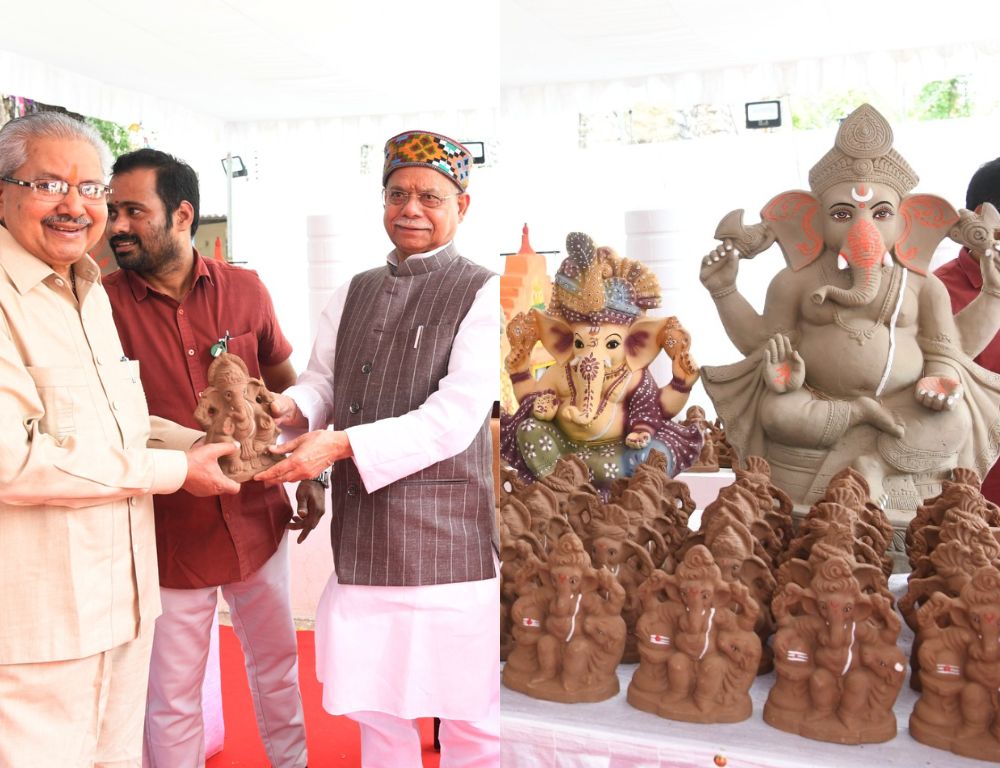
    In a meaningful gesture to kickstart the eco-friendly movement, Governor Shukla and his wife, Smt. Janaki Shukla, personally distributed natural clay Ganesha idols to officials, employees of the Lok Bhavan, and members of the media on Friday.

    This symbolic act underscores the administration’s commitment to fostering a culture of sustainability, demonstrating that traditional devotion and environmental responsibility can go hand in hand.

    The Case for Clay: Protecting Our Water Bodies

    With idol installation and puja ceremonies set to begin on September 14, the Governor emphasized the critical need to safeguard Telangana’s lakes, rivers, and reservoirs during the festival and subsequent Nimajjanam (immersion).

    Governor Shukla highlighted the scientific and environmental benefits of traditional clay idols:

    “Clay idols, made from natural materials, dissolve easily in water and can significantly help reduce the pollution caused by immersion. I appeal to all devotees to strictly avoid idols made of Plaster of Paris (PoP) and those painted with harmful, chemical-based colors.”

    PoP idols and synthetic paints do not dissolve completely, leaving behind toxic residues that severely degrade water quality, harm aquatic life, and contaminate the groundwater that many communities rely on.

    A Call to Action for the Media

    Recognizing the powerful role of the press in shaping public opinion, Governor Shukla specifically urged media organizations and journalists to amplify the message of sustainable celebrations.

    He called on the media to:

    • Highlight the importance and availability of clay idols.
    • Educate the public on water conservation techniques during the festival.
    • Report on the adverse effects of chemical pollution to encourage behavioral change.

    By leveraging media reach, the administration aims to create a widespread, grassroots awareness campaign that resonates with every household celebrating the festival.

    Strategic Context: A Greener Vinayaka Chavithi

    This initiative aligns with broader state and national efforts to combat urban water pollution and promote sustainable festival practices. Over the years, Hyderabad and other parts of Telangana have made significant strides in adopting eco-friendly Ganesh Utsav traditions, thanks to the collective efforts of citizen groups, municipal corporations, and government bodies.

    Governor Shukla’s intervention adds high-level momentum to this movement, reinforcing the message that true devotion lies in respecting nature, which is intrinsically linked to Lord Ganesha, the remover of obstacles and the lord of new beginnings.

    How You Can Participate

    As you prepare to welcome Bappa into your homes this year, consider these simple steps:

    1. Choose Natural: Opt for unpainted or naturally colored clay idols.
    2. Eco-Friendly Immersion: Use designated artificial immersion tanks provided by the municipal corporations instead of natural lakes.
    3. Symbolic Immersion: Practice “symbolic immersion” by sprinkling a few drops of water on the idol at home and dissolving it in a bucket, then using the clay water to nourish a plant.
    4. Spread the Word: Share the message of eco-friendly celebrations with friends, family, and your local community.

    Looking Ahead

    Governor Shiv Pratap Shukla’s initiative is a timely reminder that our festivals should celebrate life in all its forms—including the environment that sustains us. By embracing eco-friendly practices this Vinayaka Chavithi, the people of Telangana can ensure that the blessings of Lord Ganesha extend to the health and prosperity of the planet for generations to come.

    Ganpati Bappa Morya!

  • Bhu Bharathi: Telangana’s New Era of Land Governance

    Bhu Bharathi: Telangana’s New Era of Land Governance

    In a transformative move aimed at ensuring transparency, efficiency, and citizen-centric land administration, the Telangana government officially launched the Bhu Bharathi portal on April 14, 2025, under the leadership of Chief Minister Revanth Reddy. This initiative replaces the controversial Dharani portal, which had faced criticism for lack of transparency and centralized control over land data.

    What is Bhu Bharathi?

    Bhu Bharathi is a comprehensive digital platform designed to modernize and streamline land records management in Telangana. The platform is built on the principles of accessibility, accountability, and accuracy, empowering both citizens and officials in handling land-related transactions and services.

    Key Features of Bhu Bharathi

    • Unified Digital Land Services
      Bhu Bharathi offers a wide range of digital services, including:
      • Land registration and mutation
      • Filing appeals and revisions
      • Conversion of agricultural land to non-agricultural use
      • Access to encumbrance certificates and survey data
    • Strong Legal Framework
      The Bhu Bharathi Act introduces 19 new legal provisions to reinforce legal clarity and governance. These address gaps left by the Dharani system and ensure lawful and transparent land transactions.
    • Decentralized, People-Friendly Approach
      In contrast to the centralized Dharani model, Bhu Bharathi decentralizes processes, giving more power to local revenue officers and surveyors. This change is expected to reduce red tape, corruption, and errors.
    • Dedicated Human Resource Support
      The Telangana government plans to train 6,000 licensed surveyors to ensure accurate land measurements, dispute resolution, and faster processing of land records.

    Why Bhu Bharathi Matters

    Land is one of the most valuable and contested assets in India. By introducing Bhu Bharathi, the government aims to:

    • Curb fraudulent land transactions
    • Provide a transparent system for land ownership
    • Speed up real estate development
    • Strengthen rural and urban land infrastructure

    It also acts as a confidence booster for investors and common citizens alike, offering a secure and legal framework for land dealings.

    How to Access Bhu Bharathi

    Citizens can visit the official portal at Bhu Bharathi to:

    • View land records
    • Apply for registrations or mutations
    • Track the status of applications
    • Get help with grievances or appeals

    Conclusion

    The launch of Bhu Bharathi marks a significant step forward in Telangana’s land governance. By combining technology with legal reforms, the portal is set to become a model for other Indian states looking to reform their land record systems. With transparency, accountability, and citizen empowerment at its core, Bhu Bharathi promises a more inclusive and just land ecosystem.

    You can visit the CCLA Telangana portal and Bhu Bharathi