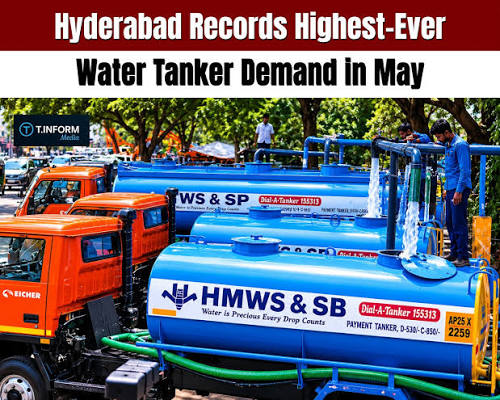
Hyderabad: Daily water tanker bookings in Hyderabad have doubled to around 7,000 in October 2026, compared with the usual 3,500 bookings recorded during the same month last year. Amid concerns over the potential impact of El Niño and adverse weather conditions, the Telangana government has urged households to reduce water consumption by at least 20% and conserve electricity.
The government is also exploring alternative sources of drinking water, expanding the use of treated wastewater and strengthening groundwater conservation measures to meet Hyderabad’s water requirements in the coming months.
During a review meeting held at the Hyderabad Collectorate on Friday, Special Chief Secretary Jayesh Ranjan directed officials to take precautionary measures to conserve water, protect groundwater resources and reduce electricity consumption. Special officers will monitor the situation across all 16 mandals in Hyderabad district, District Collector Priyanka Ala said.
The Cyberabad Municipal Corporation (CMC) has also appealed to residents, builders, commercial establishments and public agencies to minimise water wastage and increase the reuse of treated wastewater wherever possible.
Groundwater Levels Decline Sharply
Groundwater levels in Hyderabad district have declined significantly compared with the previous year. According to Harish, Deputy Director of the Ground Water Department, the average groundwater level has fallen from 3.55 metres below ground level (BGL) last year to 10 metres BGL this year.
Of the 16 mandals in Hyderabad district, only three have received normal rainfall so far, while the remaining 13 have recorded a rainfall deficit. Groundwater levels and rainfall patterns are being monitored through 33 piezometers installed across the district.
Hyderabad Metropolitan Water Supply and Sewerage Board (HMWSSB) Managing Director Ashok Reddy said there had been no inflows into the Manjeera and Singur reservoirs this year. The available water stocks are expected to meet the city’s requirements only until December, making alternative arrangements necessary.
Officials are examining options to increase water supplies through the Godavari Drinking Water Scheme, draw additional Krishna water and establish more filter beds at Himayat Sagar and Osman Sagar to strengthen the city’s drinking water supply.
Treated Wastewater to Replace Fresh Water
To reduce the pressure on freshwater resources, the HMWSSB plans to ensure that 90% of the water required for construction activities is sourced from treated wastewater available in nearby areas.
The board is also planning to make treated water mandatory for landscaping, including at government institutions, wherever applicable. Of the 13 treated-water filling stations identified under the board’s jurisdiction, three to four are currently operational.
Officials aim to make all 13 stations functional by November 1. Another 20 filling stations are also planned over the following 15 days.
The HMWSSB will introduce a mobile application called ‘Dial a Green Tanker’ to allow residents and other users to book treated water through tankers online.
CMC Commissioner G. Srijana has directed sewage treatment plant operators and concerned authorities to ensure the proper operation and maintenance of treatment facilities. She also called for greater reuse of treated wastewater for landscaping, park maintenance and other suitable non-drinking purposes, subject to applicable quality standards.
Households Asked to Reduce Water Use by 20%
The government plans to conduct extensive awareness campaigns to encourage households to reduce water consumption by at least 20%.
Residents have been advised to use water judiciously, repair leaking taps and pipelines promptly, and avoid unnecessary wastage. Apartment complexes, commercial establishments and institutions have also been encouraged to adopt water-efficient landscaping, use native plants, install efficient irrigation systems and maintain rainwater-harvesting structures.
As part of groundwater conservation efforts, District Collector Priyanka Ala directed Ground Water Department officials not to issue permissions for new borewells.
The measures are intended to reduce pressure on existing water resources and improve preparedness for a possible shortage in the coming months.
Electricity Conservation Also a Priority
Alongside water conservation, the government has urged residents and institutions to reduce electricity consumption.
TGSPDCL Managing Director Jitesh Patil said electricity demand in Telangana had reached a record peak of 20,018 MW and could rise further during March and April.
Government offices have been asked to lead by example by maintaining air conditioners at 25°C. Households, institutions and commercial establishments have also been advised to reduce electricity usage, particularly during peak-demand hours between 5 p.m. and 10 p.m.
Rainfall Outlook Remains a Concern
India Meteorological Department scientist Sravani said both daytime and nighttime temperatures were rising and the onset of winter had been delayed.
Rainfall during the withdrawal phase of the northeast monsoon is expected to be below normal, adding to concerns over water availability. However, cyclone-related weather systems could bring rainfall in November, she said.
With groundwater levels falling, reservoir inflows remaining limited and tanker bookings increasing, authorities are focusing on demand management, alternative water supplies and wastewater reuse to help Hyderabad meet its water needs in the months ahead.