
Hyderabad’s Water Future Depends on Rainwater Harvesting, Not Deeper Borewells
Hyderabad is standing at a critical crossroads in its journey toward becoming a truly sustainable global city. While the skyline continues to grow with new flyovers, skyscrapers, metro corridors, and residential townships, the city’s groundwater reserves are shrinking at an alarming pace.
Groundwater levels have already fallen beyond 100 feet in several parts of Hyderabad, forcing thousands of households and apartment complexes to depend on expensive private water tankers. Every day, the city requires more than 15,000 water tankers, and in just the last five months, residents have spent over ₹50 crore on tanker water alone.
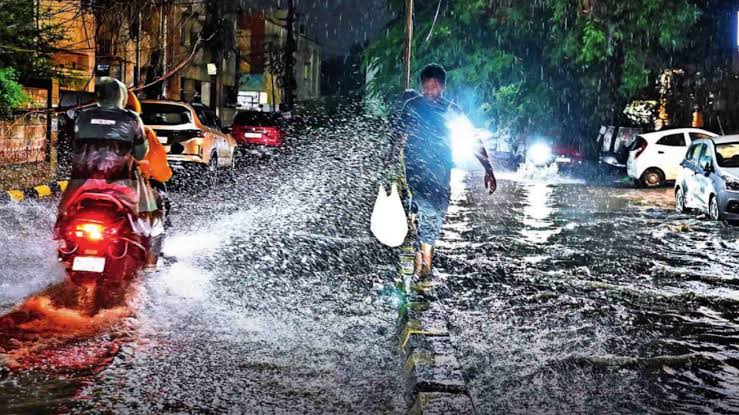
Ironically, this crisis exists despite Hyderabad receiving 800–900 mm of rainfall every year. Instead of replenishing underground aquifers, millions of litres of precious rainwater flow into stormwater drains and eventually go to waste.
Experts believe Hyderabad has reached a point where drilling deeper borewells is no longer a sustainable solution. The future lies in conserving every drop of rainwater and managing existing water resources wisely.
Hyderabad Leads in Groundwater Depletion
Hyderabad has now emerged as India’s most groundwater-depleted metropolitan city, surpassing even New Delhi and Mumbai. Rapid urbanisation, increasing concrete surfaces, disappearing lakes, and excessive groundwater extraction have severely reduced the natural recharge of aquifers.
As the city expands, water demand continues to rise while groundwater reserves continue to fall.
This trend cannot continue indefinitely.
Rainwater Harvesting: The Most Effective Solution
Water experts unanimously agree that Rainwater Harvesting (RWH) is the single most effective and affordable solution to restore groundwater levels.
Although the Water, Land and Trees Act (WALTA), 2002 made rainwater harvesting mandatory for residential, commercial, and institutional buildings above the prescribed area, implementation has remained weak.
Today, only about 15% of Hyderabad has functional rainwater harvesting recharge systems.
This means nearly 85% of the city’s rainwater still goes unutilised.
Experts stress that merely constructing recharge pits is not enough. They must be:
• Scientifically designed according to soil conditions.
• Properly maintained.
• Regularly desilted and cleaned.
• Connected effectively to rooftop drainage systems.
When designed correctly, these systems significantly improve groundwater recharge and ensure sustainable water availability throughout the year.
Recycle Water, Save Drinking Water
Another major opportunity lies in wastewater recycling.
Hyderabad generates nearly 2,000 MLD (Million Litres per Day) of sewage. A significant portion of this water can be treated and reused for:
• Construction activities
• Industrial operations
• Landscaping
• Parks and gardens
• Lake rejuvenation
• Road cleaning
• Cooling systems
This allows valuable drinking water to be reserved exclusively for human consumption.
Experts estimate that nearly 30–40% of the drinking water supplied across Hyderabad can eventually be replaced with treated recycled water for non-potable purposes.
Unfortunately, despite this enormous potential, only 2% of treated wastewater is currently being reused in the city.
Infrastructure Must Work With Nature
Urban planners recommend integrating rainwater harvesting into every future infrastructure project.
This includes:
✔ Roads
✔ Flyovers
✔ Metro stations
✔ Parks
✔ Government buildings
✔ Educational institutions
✔ Commercial complexes
✔ Public spaces
Roadside recharge trenches, rain gardens, and permeable surfaces can dramatically reduce runoff while allowing rainwater to naturally recharge underground aquifers.
At the same time, Hyderabad’s traditional lakes, feeder channels, and natural water bodies—which historically served as major groundwater recharge zones—must be restored and protected.
Apartment Communities Are Showing the Way
Several residential communities have already demonstrated that investing in rainwater harvesting delivers remarkable results.
Anuhar Purple Tunes, Manikonda
The 20-flat apartment community installed a scientifically designed rainwater harvesting system connected to rooftop drainage.
The transformation has been remarkable.
Last summer:
• Around 90 water tankers were required.
• Residents spent nearly ₹90,000 on tanker water.
• Monthly electricity bills reached around ₹20,000 because borewell pumps had to lift water from greater depths.
This summer:
• Not a single water tanker has been required.
• Monthly electricity costs have reduced to nearly ₹13,000.
• Groundwater levels have recovered significantly.
• Borewell pumps now fill overhead tanks in less than an hour.
The project has not only saved money but has also provided long-term water security for the entire community.
Beverly Springs, Madhapur
Another inspiring example comes from Beverly Springs Apartment in Madhapur.
Previously spending nearly ₹1 lakh every summer on tanker water, residents invested in:
• A scientifically designed recharge pit.
• An injection borewell.
• A centralized rooftop rainwater harvesting network.
The community expects substantial groundwater recharge, improved borewell performance, reduced tanker dependence, and long-term savings in the coming years.
Their initiative demonstrates how collective community action can make a meaningful difference.
What Hyderabad Must Do Next
Experts recommend a comprehensive three-pronged strategy:
🌧 Universal Rainwater Harvesting
Every eligible building should install and maintain scientifically designed rainwater harvesting systems.
♻️ 100% Sewage Treatment and Reuse
Treated wastewater should become the primary source for all non-drinking applications.
💧 Protect Freshwater Resources
Freshwater should be reserved primarily for drinking while maintaining a strategic reservoir reserve to ensure water security during droughts and emergencies.
Additionally, regular audits of rainwater harvesting systems, incentives for compliant communities, and stricter enforcement against non-compliance will significantly improve groundwater recharge across the city.
Every Drop Counts
Hyderabad’s water crisis is not caused by a lack of rainfall—it is caused by the way rainwater is managed.
The city receives enough rainfall every year to recharge its groundwater, but without effective harvesting systems, this valuable resource simply flows away.
The encouraging examples from Manikonda and Madhapur prove that practical, community-driven solutions already exist. If these initiatives are replicated across thousands of homes, apartments, institutions, and commercial buildings, Hyderabad can reduce tanker dependence, restore groundwater levels, lower energy costs, and secure its water future.
Water security must become as important as roads, metro lines, and high-rise buildings. The choices we make today will determine whether future generations inherit a city struggling for every drop or one that thrives through sustainable water management.
Save Rain. Recharge Groundwater. Reuse Water. Secure Hyderabad’s Future.