Author: administrator

  • Planon Expands Hyderabad Footprint with New Facility, Boosting AI and Cloud Innovation in Telangana

    Planon Expands Hyderabad Footprint with New Facility, Boosting AI and Cloud Innovation in Telangana

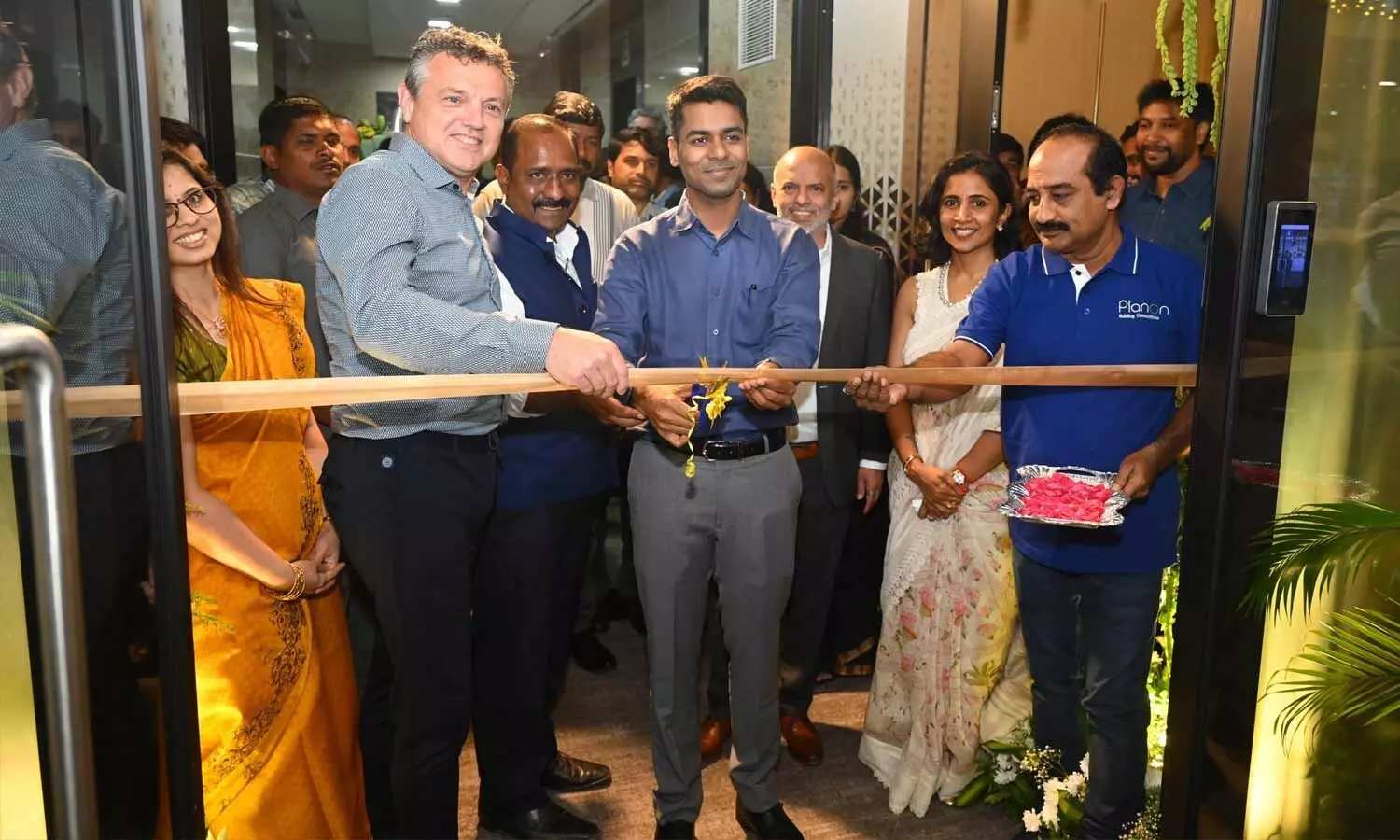
    Hyderabad, October 2026 – Global smart building management software company Planon India has expanded its Hyderabad facility, strengthening its presence in one of India’s leading technology hubs.

    The expanded centre will support Planon’s growing operations and contribute to the company’s global technology and product development activities.

    Hyderabad Centre to Focus on Technology and Innovation

    Planon’s expanded Hyderabad facility will focus on several key technology areas, including software engineering, product development, cloud technologies and artificial intelligence.

    The centre will help develop digital solutions that enable organisations to manage workplaces, buildings and real estate more efficiently.

    AI and machine learning will also play an important role. These technologies can support applications such as predictive maintenance, energy optimisation and smarter use of building spaces.

    Telangana Leaders Attend Inauguration

    The facility’s inauguration brought together government and company representatives, highlighting Hyderabad’s growing role in the technology sector.

    Those attending included:

    • Anudeep Durishetty, Joint Secretary, IT, Electronics and Communications Department, Government of Telangana
    • Manne Sateesh Kumar, Chairman, Telangana Technology Services
    • Henk Laracker, CEO, Planon
    • Kiran Madhunapantula, Statutory Director, Planon India
    • Radhika Reddy Gangarapu, Centre Head, Planon Hyderabad

    Planon CEO Henk Laracker highlighted Hyderabad’s importance to the company’s global operations, particularly in research, development and operational activities.

    Planon Hyderabad Centre Head Radhika Reddy Gangarapu also emphasised the city’s strong technology talent pool and its role in supporting the company’s global innovation goals.

    Focus on Diversity and Inclusion

    The company also highlighted its commitment to workplace diversity.

    According to Planon, women represent more than 40% of its workforce in India. The company sees gender diversity as an important part of building an inclusive technology workforce.

    What Planon’s Expansion Means for Hyderabad

    The expansion adds to Hyderabad’s growing reputation as a destination for global technology and product development.

    More Technology Opportunities

    The expanded operations could support opportunities for professionals in software engineering, artificial intelligence, data science and product management.

    Smart Building Innovation

    Planon’s focus on connected and sustainable buildings aligns with the growing demand for energy-efficient and digitally managed workplaces.

    Strengthening Hyderabad’s GCC Ecosystem

    The expansion also reflects the broader growth of Global Capability Centres (GCCs) in Hyderabad. Increasingly, these centres are moving beyond traditional IT support to undertake product development, engineering, research and strategic functions.

    Hyderabad’s Role in the Future of Smart Buildings

    The demand for intelligent and sustainable buildings is increasing as organisations look for better ways to manage energy, space and workplace operations.

    With its expanded Hyderabad facility, Planon aims to combine global technology development with Hyderabad’s growing pool of skilled professionals.

    The investment further strengthens Hyderabad’s position as a hub for technology innovation and could contribute to the city’s expanding smart building and digital transformation ecosystem.
  • Seed to Cloth Handloom Workshop in Hyderabad | Pillakalvalu

    Seed to Cloth Handloom Workshop in Hyderabad | Pillakalvalu

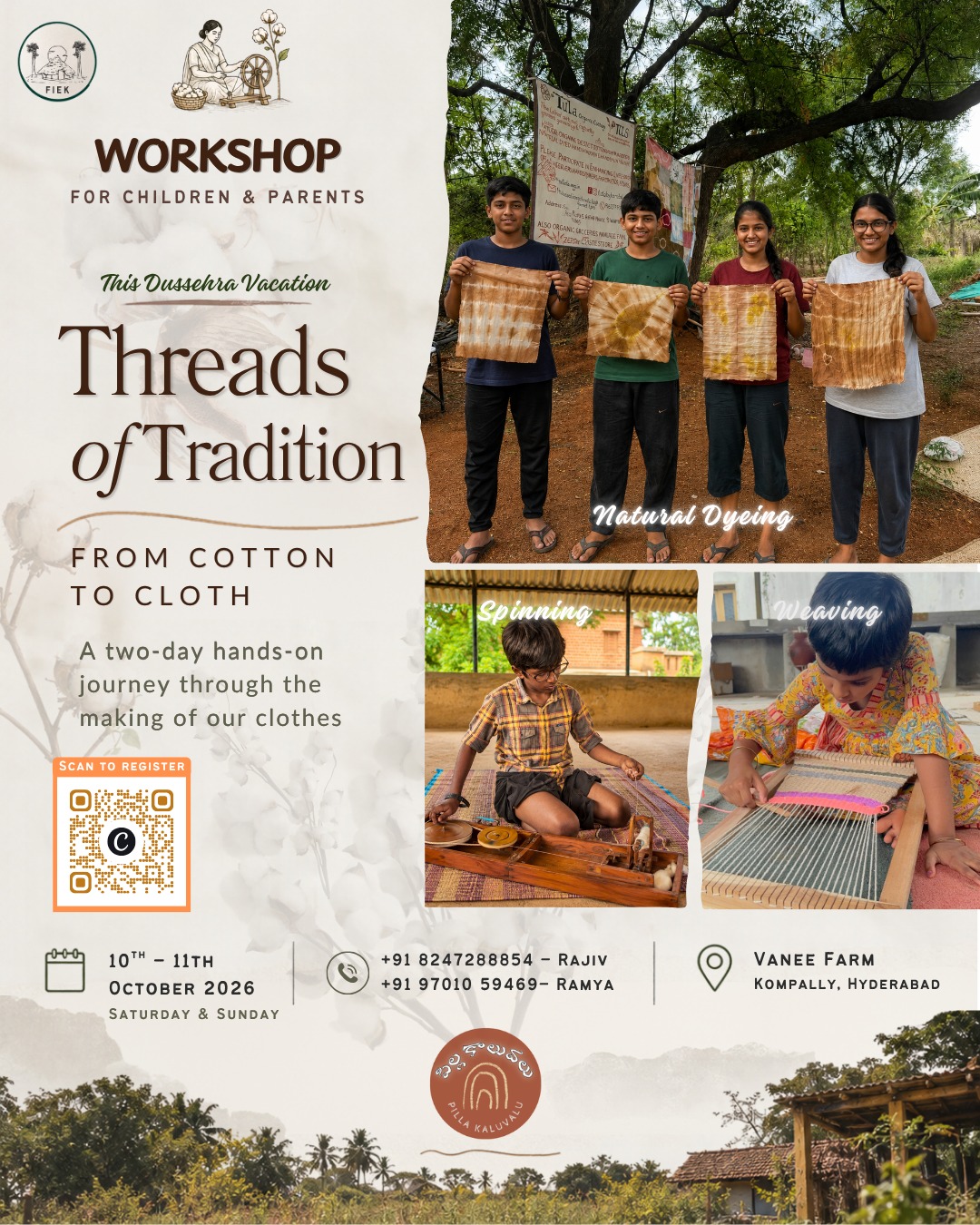
    Have you ever looked at the clothes you wear every single day and wondered about their origins? In today’s era of fast fashion, the intricate journey of how a garment is made has become invisible. Behind every piece of cloth lies a long, quiet chain of hands: the farmer who grows the crop, the spinner who twists the fiber, the dyer who breathes color into the yarn, and the weaver who brings it all together on the loom.

    These stories are slowly fading, but it is time to reconnect with them.

    Pillakalvalu invites you to step away from the hustle of daily life and experience the magic of textile creation firsthand at “Threads of Tradition: From Seed to Cloth”—a two-day, immersive hands-on workshop.

    The Experience

    Set against the serene backdrop of Vanee Farm in Kompally, Hyderabad, this workshop is an invitation to slow down. Over two days, you will trace the entire journey of a garment, working with your own hands to understand the traditional processes that once shaped our nation’s freedom and identity.

    Here is what you will be doing during the retreat:

    🌱 Cotton Processing: Learn to separate seeds from raw desi cotton using traditional methods. ☁️ Carding & Preparing: Card the cotton and roll punis (the preparation for spinning). 🎡 Spinning: Sit at the charkha and experience the meditative rhythm of spinning your own yarn. 🌸 Natural Dyeing: Discover the vibrant, eco-friendly colors hidden in nature as you create dyes from roots, bark, flowers, and leaves. 🧶 Weaving: Sit at the loom and weave a piece of cloth yourself, experiencing the culmination of the seed-to-cloth journey.

    Event Details

    • Dates: 10th & 11th October 2026 (Saturday & Sunday)
    • Time: 9:30 AM – 5:00 PM (Both days)
    • Venue: Vanee Farm, Kompally, Hyderabad
    • Workshop Fee: ₹2,900 per person

    Why You Should Attend

    This workshop is more than just a craft class; it is a retreat into mindfulness and heritage. By touching the very roots of your clothing, you will gain a profound appreciation for the artisans who craft our textiles. You will leave not just with new skills, but with a deep connection to the values of self-reliance and tradition that once shaped our freedom movement.

    Register Now

    Spaces are limited to ensure a deeply personal, hands-on experience for all participants. Secure your spot today and be part of this beautiful journey.

    ✍️ Register here: https://forms.gle/3xsumSh89H1ZQaqv8

    📞 Contact for Queries:

    • Rajiv: +91 82472 88854
    • Ramya: +91 97010 59469

    📸 Follow us on Instagram: https://www.instagram.com/pillakaluvalu/

    Come slow down, touch the roots of your clothing, and weave your own thread of tradition. We can’t wait to see you there!

  • KBR Park Hyderabad Project Plan Changed, New Flyover Proposal Emerges

    KBR Park Hyderabad Project Plan Changed, New Flyover Proposal Emerges

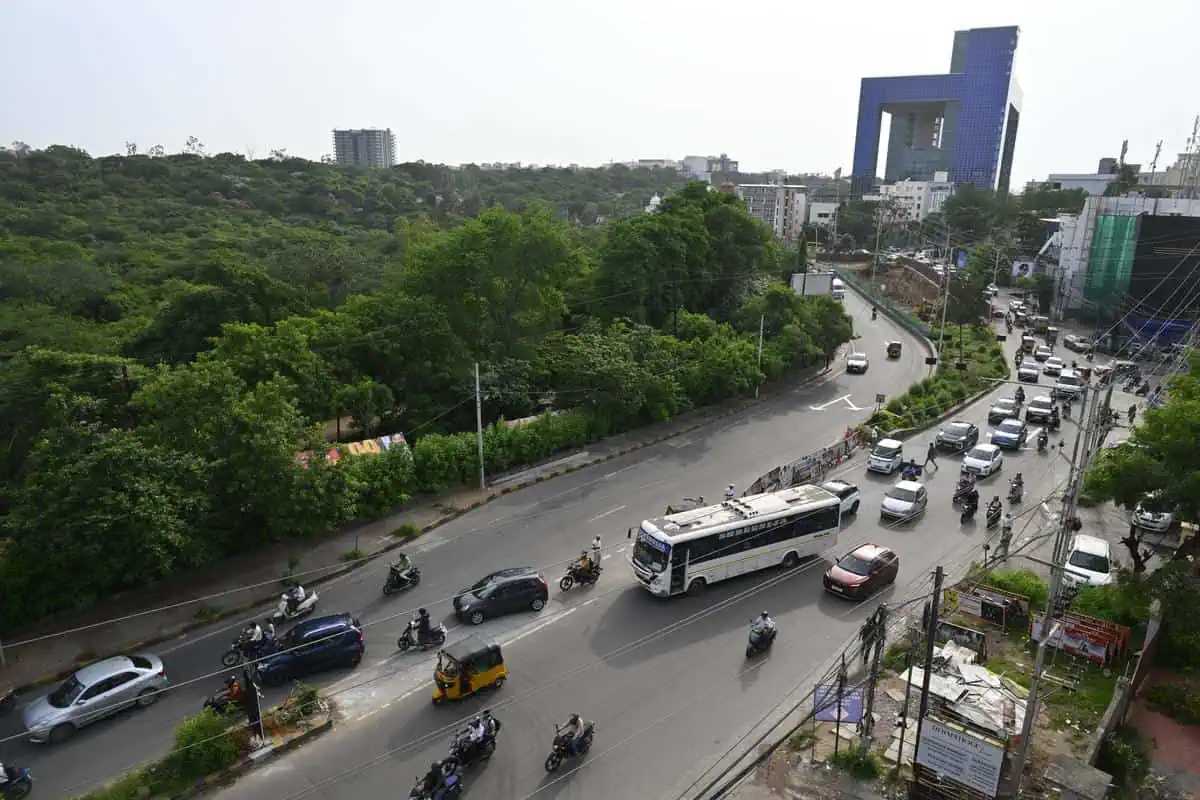
    Hyderabad, October 2026 – In a major victory for pragmatic urban planning and fiscal responsibility, the Greater Hyderabad Municipal Corporation (GHMC) and the Telangana government have officially shelved the ambitious ₹1,090 crore flyover and underpass project around the iconic KBR (Kasu Brahmananda Reddy) National Park.

    Instead of pouring billions into massive concrete infrastructure, authorities have opted for a smarter, highly effective alternative: continuing the recently implemented one-way traffic system, supplemented by a single, targeted elevated platform connecting KBR Road to the Jubilee Hills Metro Station.

    The Original Plan: A ₹1,000+ Crore Mega-Project

    Initially, to combat the severe traffic congestion plaguing the roads surrounding KBR Park, the government proposed a massive infrastructural overhaul. The plan included constructing multiple flyovers and underpasses to streamline vehicular movement. Estimated to cost over ₹1,000 crore, the project was designed to be a permanent, heavy-duty solution to one of Hyderabad’s most notorious traffic bottlenecks.

    The Pivot: Why the Change of Plans?

    Before committing to the massive expenditure, authorities implemented a one-way traffic system as a trial measure to assess traffic flow and public adaptation. The results were nothing short of transformative.

    Despite initial public skepticism and navigation challenges during the first few days, the one-way system proved to be highly successful. Traffic congestion, which had plagued the area for years, dissipated significantly. The smooth flow of vehicles nullified earlier criticisms, proving that a low-cost, smart traffic management strategy could achieve what a ₹1,000 crore concrete project aimed to do.

    The New Strategy: Minimalist and Effective

    With the one-way system now fully embraced by the public, the government has revised its approach:

    1. Shelving the Mega-Project: The construction of multiple flyovers and underpasses has been officially dropped, saving the exchequer over ₹1,000 crore.
    2. Targeted Elevated Platform: The only major infrastructural addition will be a single overpass with an elevated platform starting from the midway point of KBR Road and connecting directly to the Jubilee Hills Metro Station. This ensures seamless last-mile connectivity for commuters without disrupting the park’s ecosystem.

    Strategic Impact on Urban Planning

    This decision marks a significant shift in how Hyderabad approaches urban mobility and infrastructure development:

    • Massive Fiscal Savings: Redirecting ₹1,000+ crore allows the government to allocate funds to other critical civic projects across the city, from drainage improvements to peripheral road expansions.
    • Ecological Preservation: KBR Park is a vital green lung for Hyderabad. Avoiding massive excavation and concrete construction around its periphery protects the local biodiversity, reduces noise pollution, and preserves the park’s serene environment.
    • Proof of Concept for “Soft” Infrastructure: The success of the one-way system demonstrates that behavioral and regulatory changes (soft infrastructure) can sometimes be more effective and sustainable than heavy civil engineering (hard infrastructure).
    • Enhanced Public Trust: By listening to the ground reality and adapting the plan based on successful trial results, the authorities have shown responsiveness to public convenience and fiscal prudence.

    Looking Ahead

    The “No KBR Flyover” decision is a refreshing example of adaptive governance. It proves that the best solutions are not always the most expensive ones. As Hyderabad continues to grow, this balanced approach—prioritizing smart traffic management, ecological sensitivity, and fiscal responsibility—will be crucial in shaping a truly sustainable and livable smart city.

    An official announcement regarding the revised timeline for the Jubilee Hills Metro elevated platform is expected soon, but for now, commuters can breathe a sigh of relief: the roads around KBR Park are flowing smoothly, and the park’s tranquility remains intact.

  • Hyderabad Urban Growth: Can the City Bridge Its Infrastructure and Affordability Gap?

    Hyderabad Urban Growth: Can the City Bridge Its Infrastructure and Affordability Gap?

    Hyderabad is changing rapidly. Glass towers, technology parks and luxury residential projects are reshaping the city’s skyline. At the same time, older neighbourhoods and peripheral communities continue to face challenges involving roads, drainage, water supply and affordability.

    This contrast raises an important question: Can Hyderabad’s next phase of growth benefit the entire city?

    An analysis by Nomula Srinivas Rao highlights the opportunities and challenges created by Hyderabad’s rapid urban expansion.

    Two Different Faces of Hyderabad

    The western corridor, including Narsingi, Kokapet and the Financial District, has become a major centre for technology, business and premium housing.

    Modern communities offer facilities such as power backup, water treatment and convenient access to workplaces. New roads and transport projects are also changing the region’s connectivity.

    However, the picture is different in several older and peripheral areas.

    Some neighbourhoods continue to face narrow roads, ageing drainage systems and limited civic infrastructure. During heavy rains, waterlogging can expose weaknesses in urban drainage and the loss of natural water-retention areas.

    Water supply is another concern in some developing areas, where residents may depend on private tankers.

    The Affordability Challenge

    Rapid development has also created an affordability challenge.

    Rising property prices in established locations can push middle-income families toward areas farther from major employment centres. Locations such as Bachupally and Kollur have attracted buyers looking for relatively affordable housing.

    However, moving farther from employment hubs can mean longer commutes and greater dependence on private vehicles.

    This creates a difficult balance between affordable housing, employment access and sustainable urban growth.

    Hyderabad’s Move Towards Polycentric Development

    One possible solution is a polycentric urban model.

    Instead of concentrating employment, housing and infrastructure in one part of the city, development can be distributed across multiple centres.

    Several major initiatives could support this transition.

    Regional Ring Road

    The proposed Regional Ring Road (RRR) is expected to improve connectivity between Hyderabad’s surrounding towns and reduce pressure on the existing urban network.

    Transit-Oriented Development

    Transit-Oriented Development (TOD) can encourage higher-density residential and commercial development around major public transport corridors.

    The approach can reduce dependence on private vehicles while improving access to jobs and services.

    New Employment Clusters

    Developing industrial, healthcare, life-sciences and technology clusters outside the traditional western IT corridor could distribute employment opportunities more evenly across the metropolitan region.

    Infrastructure Must Keep Pace

    Urban growth cannot depend only on new buildings.

    For Hyderabad to remain liveable, infrastructure must grow alongside real estate development. Drainage, water supply, public transport, roads and green spaces need to be planned as part of the same urban system.

    Gated communities can provide high-quality private facilities, but they cannot replace strong public infrastructure.

    A More Inclusive Future for Hyderabad

    Hyderabad has the opportunity to combine its technology-driven economy with better urban planning.

    The city’s future success should not be measured only by new skyscrapers, property values or investment. It should also be measured by how easily people can access housing, jobs, transport, water, drainage and public spaces.

    The challenge now is to connect Hyderabad’s historic neighbourhoods, emerging suburbs and modern business districts into one more inclusive urban system.

    If planned effectively, Hyderabad can continue to grow as a global technology and business hub while creating a city that is more connected, affordable, resilient and liveable for its residents.

  • EKAM Business Conclave 2026 Brings 300+ Entrepreneurs to Hyderabad

    EKAM Business Conclave 2026 Brings 300+ Entrepreneurs to Hyderabad

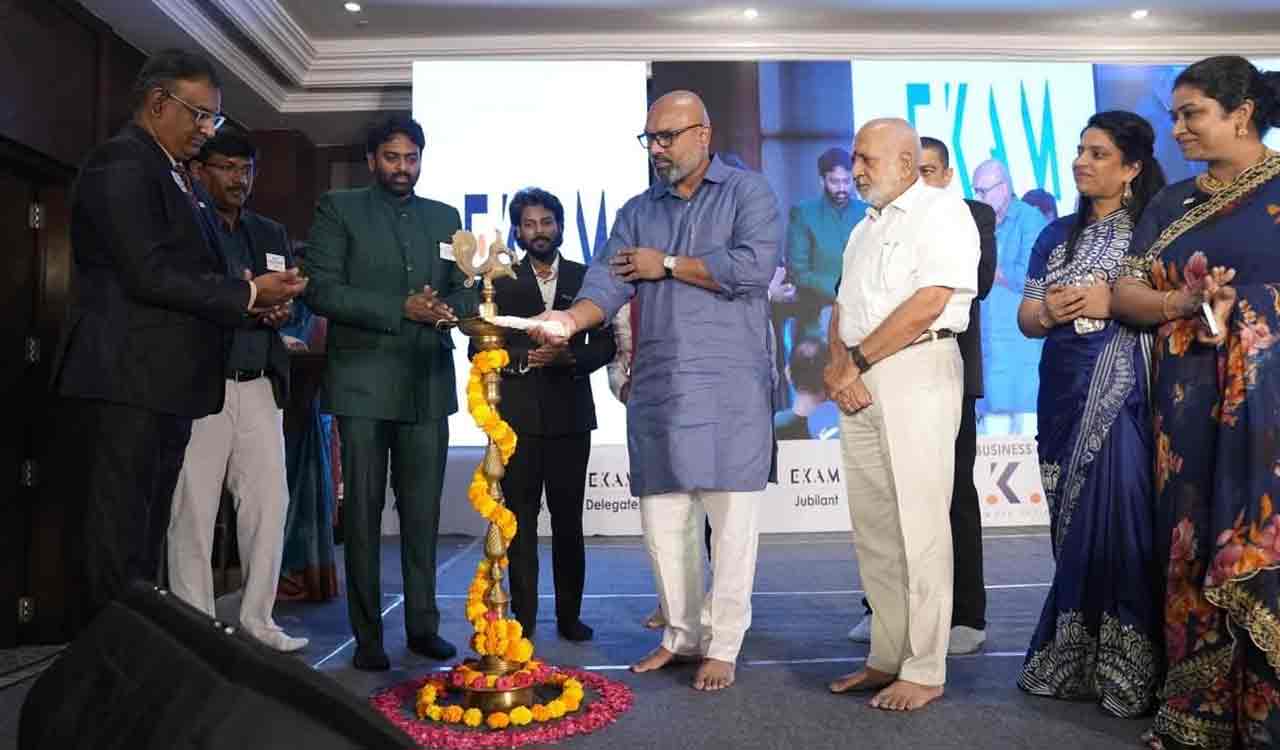
    In a powerful display of the city’s thriving startup and business ecosystem, the Ekam Global Network successfully hosted the Ekam Business Conclave 2026 in Hyderabad. Bringing together more than 300 entrepreneurs, business owners, professionals, and industry leaders, the event served as a dynamic platform for networking, knowledge sharing, and celebrating entrepreneurial success under the resonant theme: ‘Connect, Collaborate, Grow’.

    Event Highlights and Scope

    The conclave was designed to be much more than a traditional corporate gathering. It featured a rich agenda aimed at fostering genuine business synergies, including:

    • Live Networking Sessions: Facilitating direct, meaningful interactions among diverse industry players.
    • Member Success Stories & Spotlights: Showcasing real-world entrepreneurial journeys and milestones achieved within the Ekam ecosystem.
    • Awards and Recognition: Felicitating members who demonstrated exceptional leadership, active participation, and unwavering support for fellow entrepreneurs.
    • Anniversary Celebrations: Marking another year of the network’s commitment to empowering the business community.

    Leadership Perspectives: Smart Work and Meaningful Relationships

    A major highlight of the conclave was an exclusive talk show featuring Nizamabad MP Dharmapuri Arvind, who engaged directly with the participating entrepreneurs. Offering pragmatic advice for navigating today’s volatile market, MP Arvind emphasized the need for agility and innovation.

    “In the current business environment, hard work alone may not be sufficient; smart thinking is equally important,” Arvind noted, urging entrepreneurs to “think differently, adapt to changing circumstances, and keep dreaming big.”

    Echoing this sentiment of purposeful connection, Himavanth Vallabhaneni, Founder of Ekam Global Network, highlighted the core philosophy of the organization:

    “The organisation was not merely about exchanging business cards, but about building relationships that create opportunities.”

    Strategic Impact on Hyderabad’s Business Ecosystem

    Events like the Ekam Business Conclave play a pivotal role in strengthening Hyderabad’s position as a premier hub for innovation and commerce in India. The strategic impact of this gathering includes:

    1. Fostering a Collaborative Culture: By shifting the focus from transactional networking to relationship-building, the conclave helps create a supportive ecosystem where businesses can cross-pollinate ideas and resources.
    2. Promoting Adaptive Entrepreneurship: With insights from political and business leaders, attendees are better equipped to pivot and innovate in response to rapid market changes and technological advancements.
    3. Recognizing and Retaining Talent: By publicly awarding and spotlighting local business leaders, Ekam reinforces a culture of excellence and encourages healthy, constructive competition within the community.
    4. Driving Local Economic Growth: Connecting 300+ decision-makers in one room inevitably leads to new partnerships, joint ventures, and investments that ripple through the local economy.

    Looking Ahead

    The success of the Ekam Business Conclave 2026 underscores a growing demand for curated, high-value networking platforms in Hyderabad. As the Ekam Global Network continues to expand its footprint, it remains committed to providing entrepreneurs with the tools, connections, and inspiration needed to scale their visions.

    For the attendees, the message was clear: in today’s economy, your network is your net worth, and growing together is the smartest business strategy of all.

  • Dasara Vacation 2026: Matheran Offers a Peaceful Escape from Hyderabad

    Dasara Vacation 2026: Matheran Offers a Peaceful Escape from Hyderabad

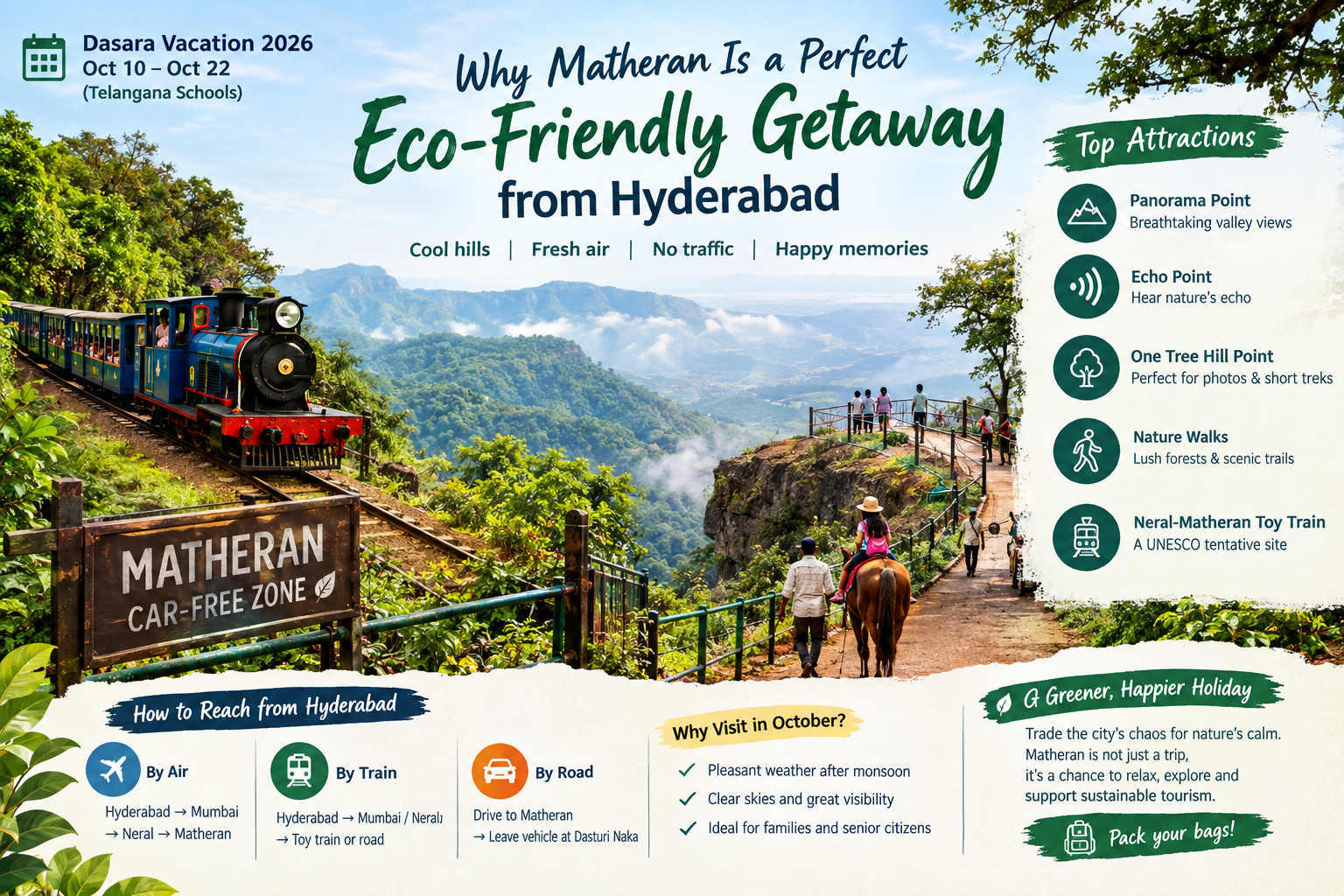
    Hyderabad, October 2026 – With Telangana schools preparing for the extended Dasara vacation from October 10 to October 22, 2026, many Hyderabad families are looking for destinations that offer a break from the city’s busy streets.

    For those seeking fresh air, greenery and a slower pace, Matheran in Maharashtra can be an excellent choice. Located in the Sahyadri hills, this popular hill station is known for its peaceful surroundings and restrictions on motor vehicles in the main tourist area.

    A Car-Free Hill Station

    Matheran stands out because visitors cannot take private vehicles into the main hill station area. Cars and other vehicles are left at Dasturi Naka, near the entrance.

    From there, visitors can explore Matheran on foot, by horse or through traditional hand-pulled rickshaws.

    The absence of regular traffic creates a quieter atmosphere. Instead of horns and congestion, visitors can enjoy forest trails, birds, fresh air and mountain views.

    Things to Do in Matheran

    Matheran offers several experiences for families and nature lovers.

    Visit Scenic Viewpoints

    Panorama Point provides wide views of the surrounding hills and valleys. Echo Point is another popular stop, while One Tree Hill Point offers a scenic setting for photography and short walks.

    Explore Nature Trails

    Matheran’s forest paths are ideal for relaxed walks. October can also provide pleasant conditions for exploring the area’s greenery and viewpoints after the monsoon season.

    Experience the Toy Train

    The Neral-Matheran toy train is one of the region’s most memorable attractions. The narrow-gauge railway offers a scenic journey through the hills. However, visitors should check the latest operating schedule before planning their trip.

    How to Travel from Hyderabad to Matheran

    There are several ways to reach Matheran from Hyderabad.

    By Air:
    Travel from Hyderabad to Mumbai and continue by road towards Neral and Matheran.

    By Train:
    Travellers can take a train towards Mumbai or Neral. From Neral, visitors can continue towards Matheran by road or check the availability of the toy train.

    By Road:
    Visitors travelling by car can drive towards Matheran. However, vehicles must be left at Dasturi Naka before entering the main hill station area.

    Why Visit Matheran During the Dasara Break?

    The October school vacation gives families an opportunity to plan a longer trip without rushing through the weekend.

    Matheran combines nature, walking trails, viewpoints and a vehicle-free environment, making it different from crowded city destinations.

    Families can spend their holiday exploring the hills, enjoying outdoor activities and taking a break from everyday urban life.

    A Relaxing Holiday Close to Nature

    For Hyderabad families planning a Dasara getaway, Matheran offers more than scenic views. Its car-free environment and forest setting provide a chance to slow down and enjoy a quieter holiday.

    With proper planning for travel, accommodation and local transport, Matheran can be a refreshing October 2026 holiday destination from Hyderabad.

  • Mega Clean-Up Drive at Mushkin Lake Collects Over 100 Kg of Waste

    Mega Clean-Up Drive at Mushkin Lake Collects Over 100 Kg of Waste

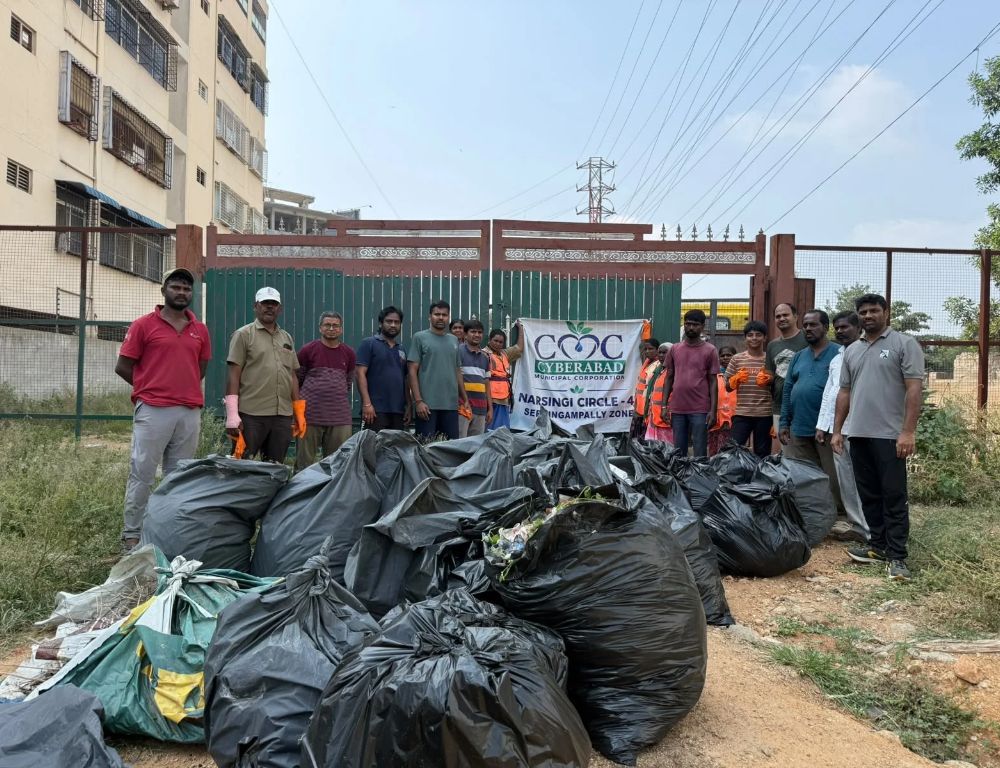
    HYDERABAD: A major clean-up drive at Mushkin Lake in Narsingi brought together environmentalists, volunteers and civic officials on Sunday, October 4, as part of the Gandhi Jayanti weekend. The initiative resulted in the collection of more than 100 kg of solid waste from the lake and its surrounding areas.

    The clean-up drive saw the participation of officials from HYDRAA, Cyberabad Municipal Corporation and HMDA, along with local volunteers and environmental groups. The collective effort focused on removing accumulated waste and drawing attention to the importance of protecting Hyderabad’s lakes and natural water bodies.

    Clean Lake Programme Focuses on Ecological Conservation

    The initiative was conducted under the Clean Lake Programme, inspired by the Swachh Bharat Mission. Organisers said the programme aims to restore the ecological health of lakes, protect local biodiversity and encourage communities to take an active role in environmental conservation.

    The drive began at 7 am at Mushkin Lake, with volunteers working across the lake and nearby areas to remove solid waste. More than 100 kg of waste was collected during the campaign, highlighting the need for regular maintenance and responsible waste disposal around water bodies.

    Residents Call for Greater Protection of Lakes

    Goutham Krishna Reddy, a local resident, said the initiative was aimed at reminding people that lakes are important not only for the environment but also for local water resources and the future of the city.

    The organisers also appealed to residents to contribute to keeping Mushkin Lake clean, stressing that protecting natural water bodies requires continuous community participation.

    “Let us keep our Mushkin Lake clean! Let us serve nature!” the organisers said.

    Community Participation Key to Sustainable Future

    The campaign highlighted several benefits of maintaining clean lakes, including better water quality, healthier ecosystems, biodiversity conservation and stronger community involvement.

    After the drive, organisers thanked members of the Mushkin Lake Protection Committee, environmental volunteers and Narsingi Circle staff for their support and cooperation.

    The initiative reinforced a simple message: clean lakes need collective responsibility. With Hyderabad continuing to grow rapidly, protecting its lakes and water resources will remain essential for a healthier and more sustainable future.

    More than 100 kg of waste was collected during a mega clean-up drive at Mushkin Lake, Narsingi. Volunteers, environmentalists and civic officials joined hands to protect the lake, conserve biodiversity and promote a cleaner Hyderabad.

  • HPS Felicitates Alumnus Prem Watsa During School Visit

    HPS Felicitates Alumnus Prem Watsa During School Visit

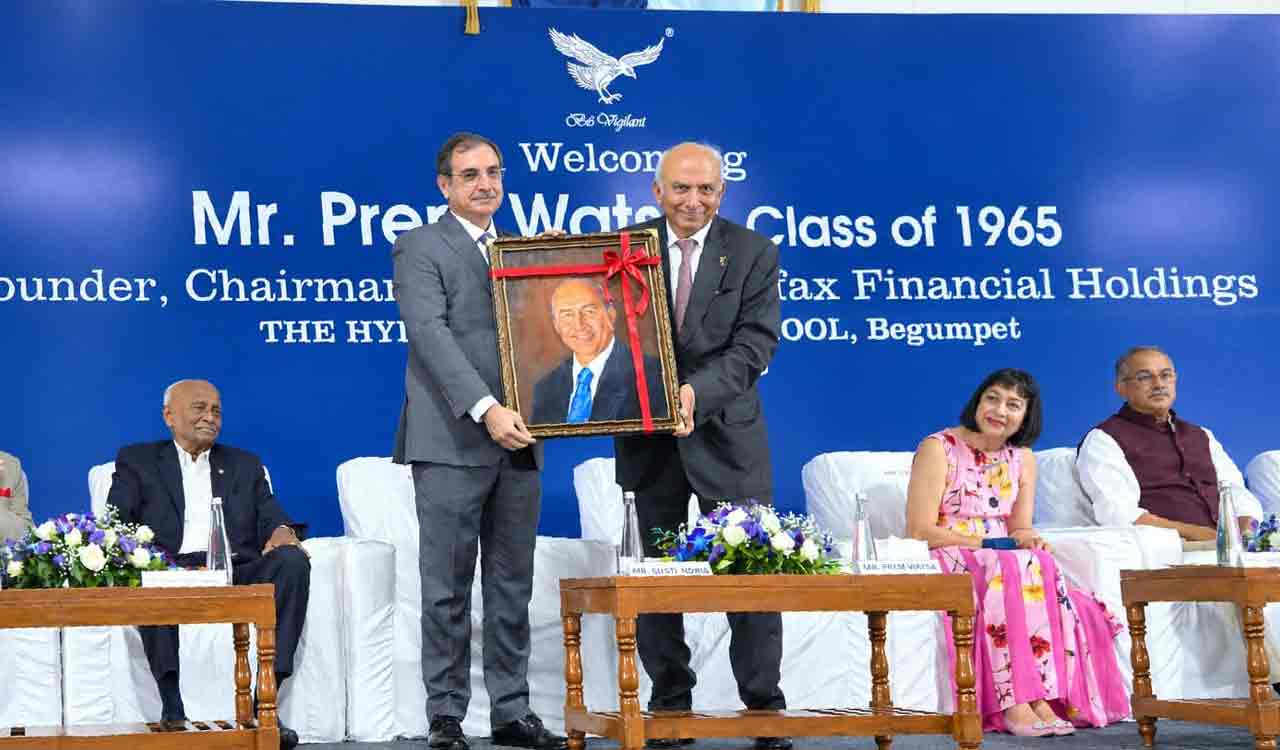
    Hyderabad: The Hyderabad Public School (HPS) felicitated distinguished alumnus Prem Watsa, Chairman of Fairfax Financial Holdings Limited and a member of the HPS Class of 1965, during his visit to the institution.

    The felicitation celebrated Watsa’s longstanding association with his alma mater and his continued support for the school. The occasion also marked the foundation stone ceremony for a new Junior School Block, which will be named in honour of his father, M.C. Watsa, who served as Principal of The Hyderabad Public School from 1969 to 1972.

    Gusti J. Noria, President of The Hyderabad Public School Society, said the institution was proud to welcome back Watsa, whose journey from the school’s classrooms to global leadership reflects the values and spirit of HPS.

    Speaking on the occasion, Prem Watsa said returning to The Hyderabad Public School was always special for him. He recalled that his years at HPS played an important role in shaping his life and added that the school has continued to remain an important part of his journey.

    The naming of the new Junior School Block after M.C. Watsa also highlights the enduring connection between the Watsa family and The Hyderabad Public School. The new facility is expected to further strengthen the school’s infrastructure and support its future generations of students. :::

  • TSCS Hyderabad Completes 4,000 Voluntary Blood Donation Camps

    TSCS Hyderabad Completes 4,000 Voluntary Blood Donation Camps

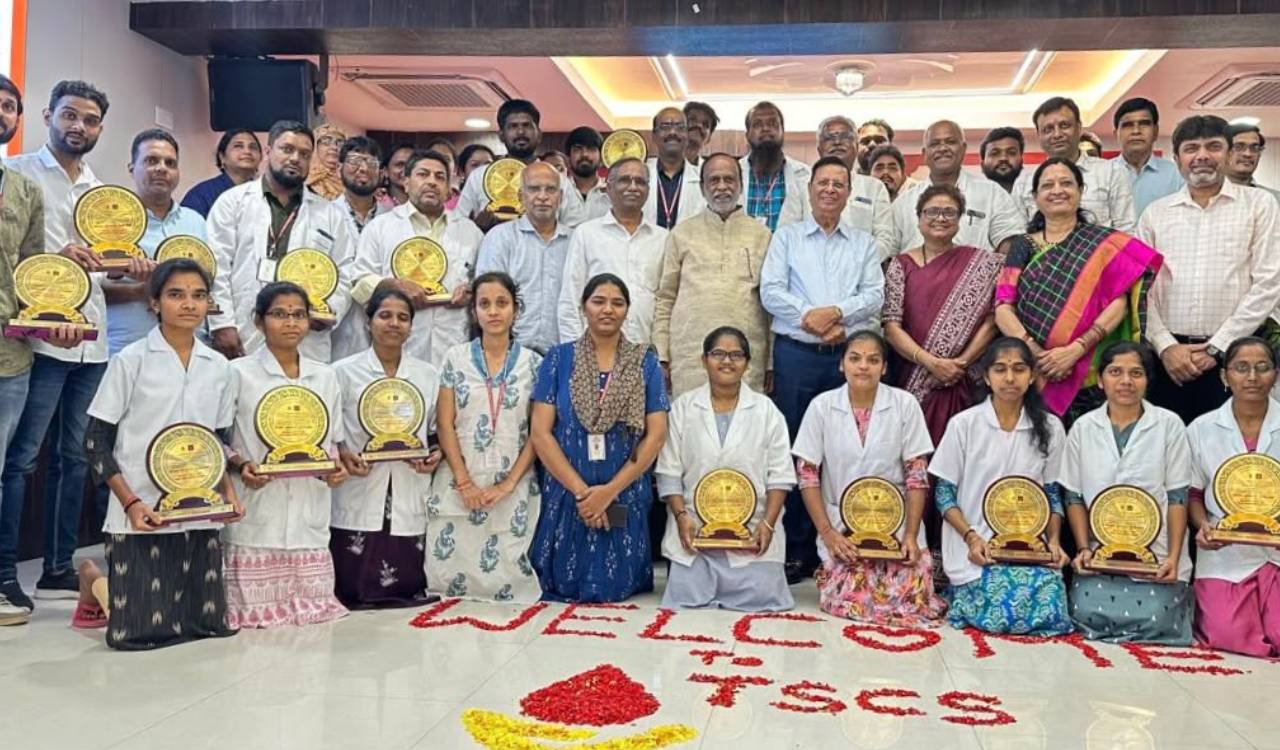
    In a landmark achievement for public health and community service, the Hyderabad-based Thalassemia and Sickle Cell Society (TSCS) has officially crossed the monumental threshold of conducting 4,000 voluntary blood donation camps. To commemorate this extraordinary milestone, the organization hosted a special felicitation program to honor the unsung heroes behind this life-saving mission: voluntary blood donors, medical staff, and dedicated volunteers.

    The Milestone: 4,000 Camps and Counting

    For patients suffering from chronic blood disorders like Thalassemia and Sickle Cell Anemia, regular blood transfusions are not a luxury—they are a lifeline. Reaching the 4,000-camp mark is a testament to the sustained, relentless efforts of the TSCS team and the generous spirit of the Hyderabad community.

    The recent felicitation ceremony was designed not only to celebrate this numerical achievement but also to raise vital awareness about these genetic blood disorders and highlight the ongoing need for a steady, safe blood supply for patients who require frequent transfusions throughout their lives.

    Recognizing the Backbone of the Mission

    While donors are the most visible participants, the success of such a massive logistical undertaking relies on a vast, coordinated network. The TSCS used this milestone event to formally recognize:

    • Voluntary Blood Donors: The everyday citizens who repeatedly step forward to donate.
    • Blood Bank Personnel & Camp Staff: The medical professionals who ensure every drop of blood is safely collected, tested, and stored.
    • Volunteers and Supporters: The grassroots organizers who mobilize communities, manage logistics, and spread awareness.

    Leadership Perspective

    Highlighting the collective effort behind this achievement, Dr. Chandrakant Agrawal, President of the Thalassemia and Sickle Cell Society, expressed his deep appreciation for the community’s unwavering support:

    “We express our deepest gratitude to the blood donors, volunteers, staff, and supporters whose continued involvement has helped the organization reach the milestone of 4,000 voluntary blood donation camps. This achievement belongs to all of them.”

    Strategic Impact on Public Health

    The work of the TSCS extends far beyond the act of collecting blood. The strategic impact of this initiative includes:

    1. Ensuring Blood Security: By organizing voluntary camps, TSCS helps maintain a reliable inventory of safe, screened blood, reducing the dependency on replacement donors during emergencies.
    2. Disease Awareness: Each camp serves as a micro-educational hub, dispelling myths about blood donation and spreading crucial knowledge about Thalassemia and Sickle Cell traits, encouraging preventive screening.
    3. Community Resilience: Building a robust network of repeat voluntary donors creates a resilient healthcare safety net that can respond swiftly to both chronic needs and acute crises.
    4. Honoring the Ecosystem: By formally felicitating behind-the-scenes workers, TSCS boosts morale and reinforces the importance of every role in the healthcare supply chain.

    Looking Ahead

    While 4,000 camps is a staggering achievement, the need for voluntary blood donation remains perpetual. As the Thalassemia and Sickle Cell Society looks to the future, this milestone serves as both a celebration of past successes and a rallying cry for continued action.

    The organization’s journey underscores a powerful truth: saving lives is a team effort. By continuing to bridge the gap between willing donors and patients in need, TSCS is not just managing a disease; it is fostering a culture of empathy, resilience, and life-saving generosity in the heart of Hyderabad.

  • Cyberabad Municipal Corporation Plans to Transform Green Waste into Industrial Bio-Fuel via New PPP Initiative

    Cyberabad Municipal Corporation Plans to Transform Green Waste into Industrial Bio-Fuel via New PPP Initiative

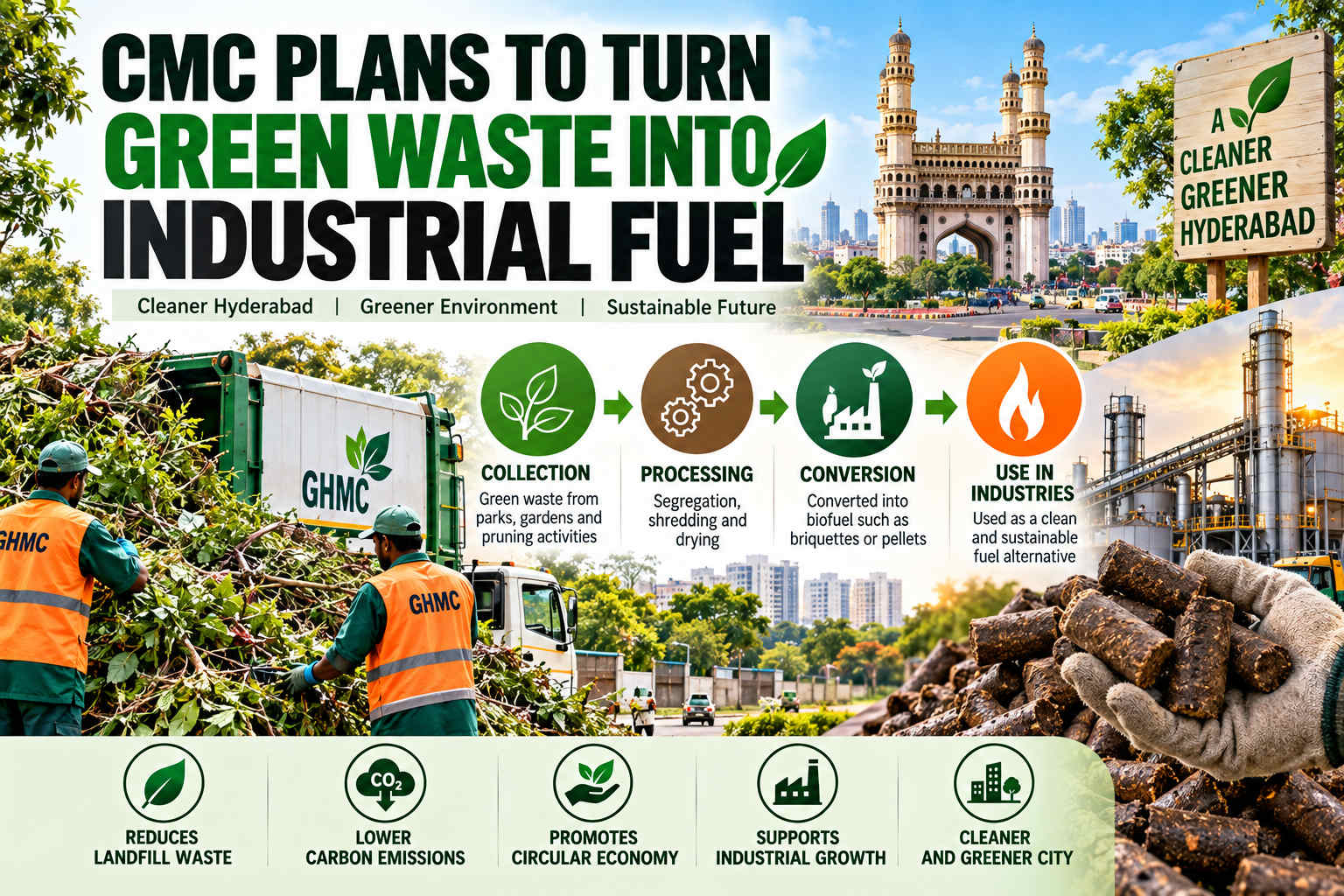
    Hyderabad, October 2026 – The Cyberabad Municipal Corporation (CMC) is planning to convert green waste from tree pruning and horticulture activities into bio-briquettes for industrial fuel. The initiative aims to improve urban waste management while creating a useful energy product from biodegradable waste.

    CMC has issued an Expression of Interest (EOI) to establish, operate and maintain a green waste-to-bio-briquette plant under a Public-Private Partnership (PPP) model.

    Turning Green Waste into Industrial Fuel

    The proposed plant will process different types of green waste, including:

    • Tree-pruning waste
    • Horticulture waste
    • Landscaping residues
    • Avenue plantation trimmings
    • Other biodegradable green waste

    The facility will have a minimum processing capacity of 5 tonnes per day. The capacity can also be increased depending on seasonal waste availability.

    The processed material will be converted into high-density bio-briquettes. These biomass-based fuels can be used as an alternative to conventional fuels such as coal and firewood in industrial applications.

    How the PPP Model Will Work

    CMC and the selected private partner will have different responsibilities under the proposed project.

    CMC will facilitate:

    • Land for the facility
    • Electricity
    • A regular supply of municipal green waste
    • Administrative and statutory approvals

    The private partner will be responsible for:

    • Investment in plant and machinery
    • Staff and manpower
    • Plant operations
    • Maintenance
    • Marketing and sale of bio-briquettes

    The private agency is expected to have relevant experience in biomass, waste management, renewable energy or briquette and pellet manufacturing.

    Environmental and Economic Benefits

    The project could provide several benefits for Hyderabad’s waste management system.

    Reduced Open Burning

    Processing green waste into fuel can help reduce the need for open burning and divert biodegradable material from disposal sites.

    Resource Recovery

    Instead of treating branches, leaves and pruning residues as waste, the project will convert them into a commercially useful biomass fuel.

    Potential Revenue

    The sale of bio-briquettes to industrial users could create a new revenue opportunity linked to municipal waste management.

    Circular Economy

    The initiative supports a circular economy approach, where waste generated through urban landscaping can be recovered and converted into a useful resource.

    Supporting Sustainable Urban Development

    Green waste from urban parks, roadsides and landscaping activities can be difficult to manage when generated in large quantities. Converting this material into bio-briquettes could provide an alternative to conventional disposal methods.

    The proposed CMC project also connects urban waste management with renewable biomass energy, potentially creating a model that could be considered by other cities.

    What Happens Next?

    CMC is inviting eligible private-sector organisations to participate in the EOI process and develop the proposed facility.

    If implemented successfully, the project could demonstrate how urban green waste can be recovered, processed and converted into industrial fuel, supporting cleaner waste management and resource recovery in Cyberabad.